The single most common question we get from first-time visitors is some version of "how fast can you do it?" The honest answer — three full days for in-person tailoring, or about three weeks for remote ordering — is not the answer most visitors want to hear when they arrive on the bus from Da Nang with two days on their itinerary. But that is the actual timeline, and the shops promising shorter ones are mostly skipping the steps that make a suit fit. This is the hour-by-hour breakdown of what real Hoi An tailoring looks like, why those hours exist, and where you can compress them honestly versus where compression destroys the result.
I have been working in this trade for long enough to have seen both ends of the spectrum: customers who arrived with seven days and ended up with three suits they wear weekly five years later, and customers who arrived with thirty-six hours and left with a wearable but compromised garment. The variable that mattered most was not the customer's body, the fabric, or even the cutter. It was time. Specifically, the hours between cut and fitting, and the hours between fittings, where the suit is allowed to settle, the cutter can re-evaluate it on a fresh morning, and the customer can wear it home and notice the things that only show up after sixty minutes of movement.
The Real Hour-by-Hour Timeline (In-Person)
This is what a properly-paced custom suit looks like at a serious Hoi An shop. The hours below assume you have arrived at the shop and started the process at 10am on a weekday. Adjust as needed for your travel schedule.
Hour 0 to Hour 1: Fabric, design, measurements
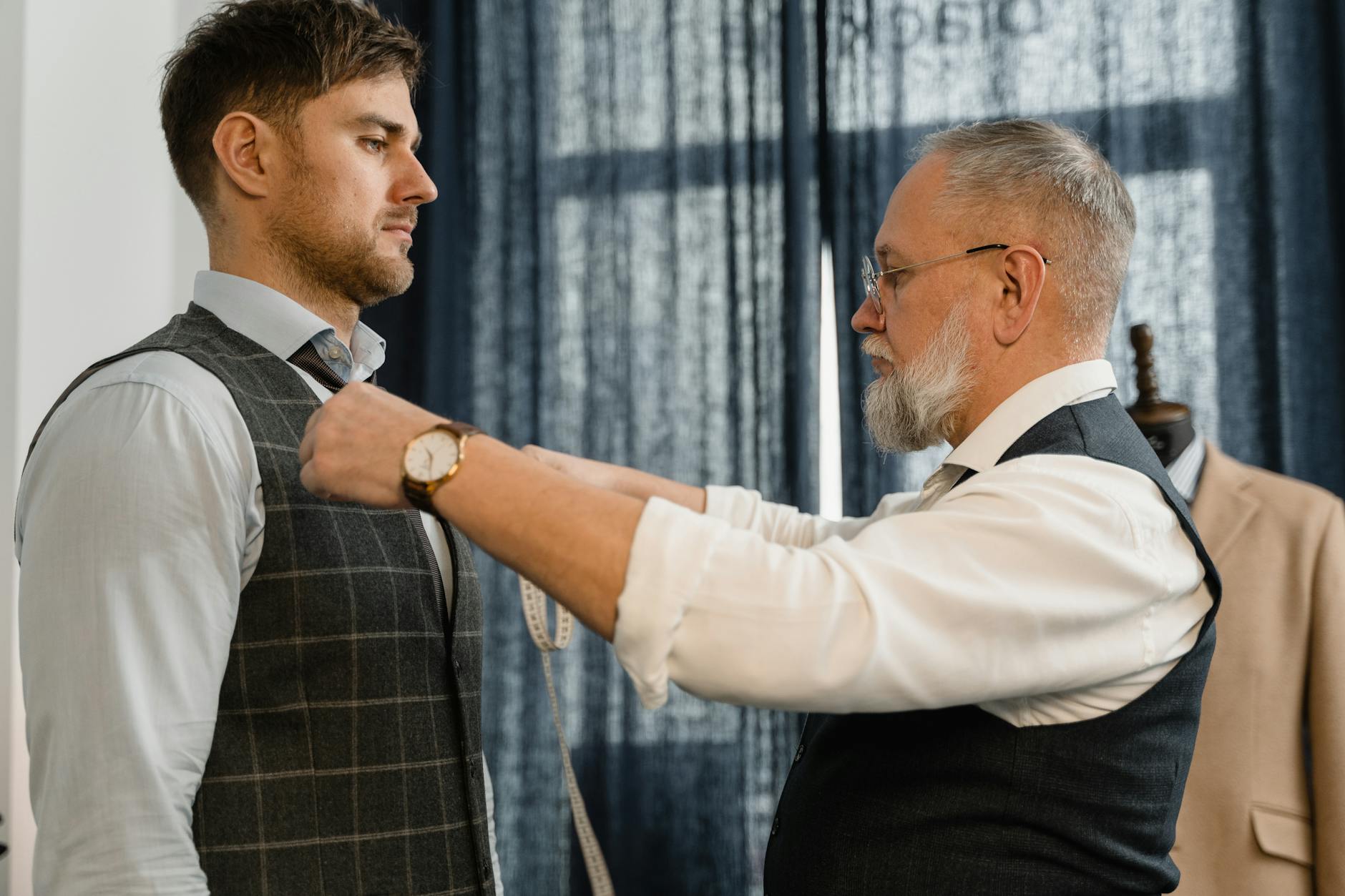
The first session at the shop is the longest of the process and the one most under-rated by visitors. A serious tailor will spend forty-five to sixty minutes on this if you let them. You handle fabric — actually pull bolts off the shelf, drape them over your shoulder in front of a mirror, see how the cloth behaves under the shop lighting. You discuss the construction (full canvas, half canvas, fused), the silhouette (British structured, Italian softer, modern slim), the lapel style, the vent configuration, the lining, the buttons. Then the measurements, which take a careful cutter twenty to twenty-five minutes for a two-piece suit. Sixteen to twenty individual measurements, recorded on paper, often re-measured for verification on the second pass.
Visitors who try to rush this hour are setting themselves up for problems later. The fabric you choose at Hour 0 cannot be undone at Hour 48 without scrapping the suit and starting again. The construction decision (canvas versus fused) is permanent. The measurement session is where the cutter gets the data they will use to draft your pattern — incomplete or hurried measurements are the single largest source of fit problems in the field.
Hour 1 to Hour 24: Pattern drafting and cutting
You leave the shop. The cutter takes your measurements to the cutting table, draws the pattern in chalk on paper, then transfers the pattern to your chosen fabric. The fabric is cut. The interior canvas is cut and shaped. The pieces are assembled into a basted state — large white tacking stitches that hold the suit together loosely, like a draft. The first sleeve is set in. The lapels are rolled but not pressed. This is roughly twelve to sixteen hours of skilled labor, and it happens overnight because that is when the workshop has the bench space for cutting.
What you are wearing tomorrow is not a finished suit. It is a three-dimensional draft of your suit in the actual fabric — held together with stitching that can be ripped out and re-sewn in twenty minutes if something is off.
Hour 24 to Hour 25: First fitting (basted state)
You return to the shop the next morning. The basted suit is hanging on a form in the fitting room. You put it on. The cutter walks around you, often with a senior cutter or the shop owner watching, and they look for the things only the human eye can see when fabric is on a real body: shoulder pitch, sleeve hang, lapel break, pant rise, seat tension, knee break, and the dozen smaller things that the pattern can't predict. They mark with chalk. They pin. They sometimes rip out a seam right there in the fitting room and re-pin it.
The first fitting is where the largest adjustments happen. If your right shoulder sits half an inch lower than your left (which most people's do), this is where the cutter compensates. If your seat is fuller than the standard pattern allowance assumed, this is where they let out the seat seam. If the chest feels tight when you raise your arms, this is where they note to add a quarter inch of ease in the armscye. Twenty to forty minutes of careful pinning and chalking. You take the suit off, hand it back, and leave again.
Hour 25 to Hour 48: Re-cut and refinement
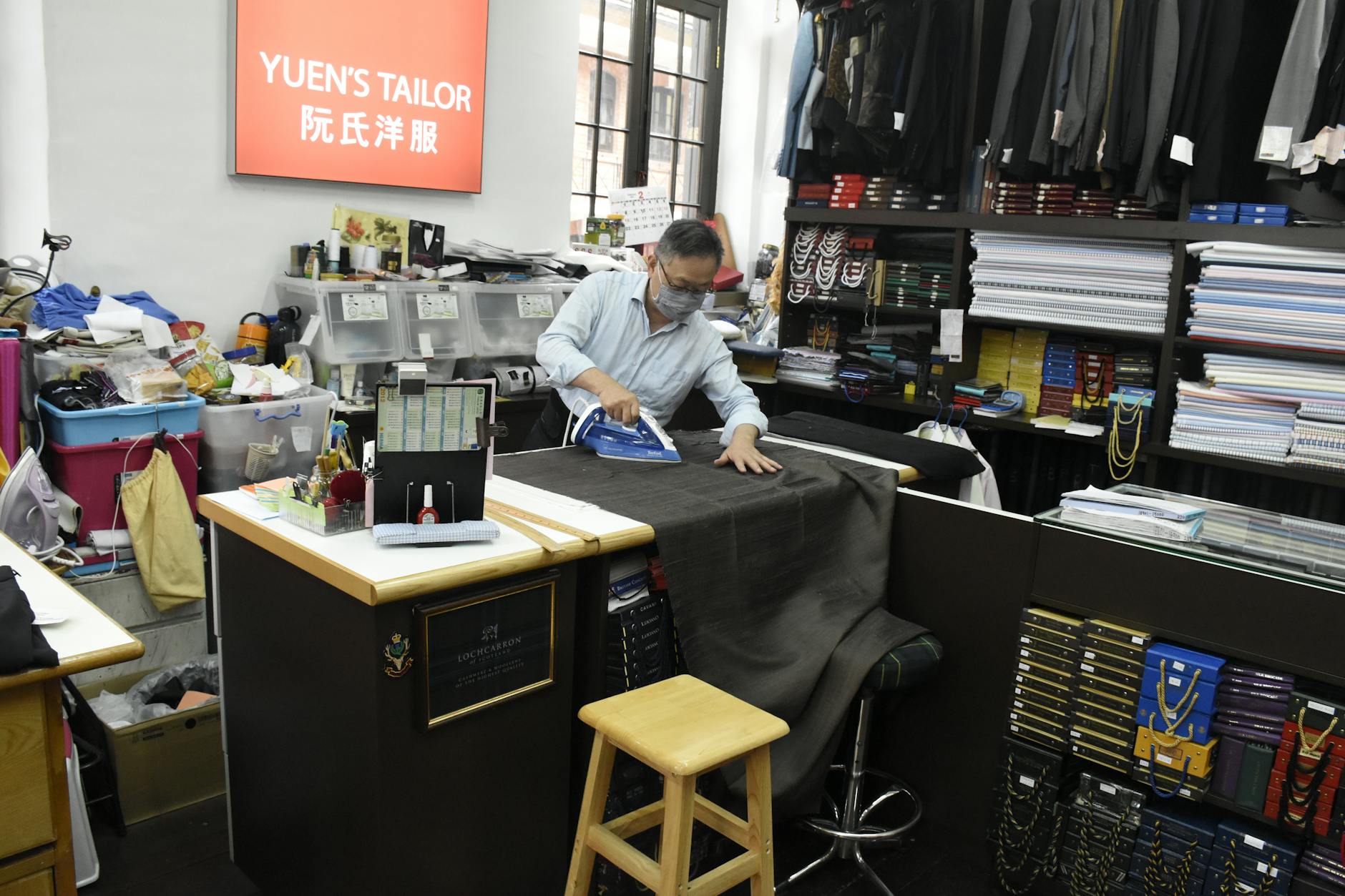
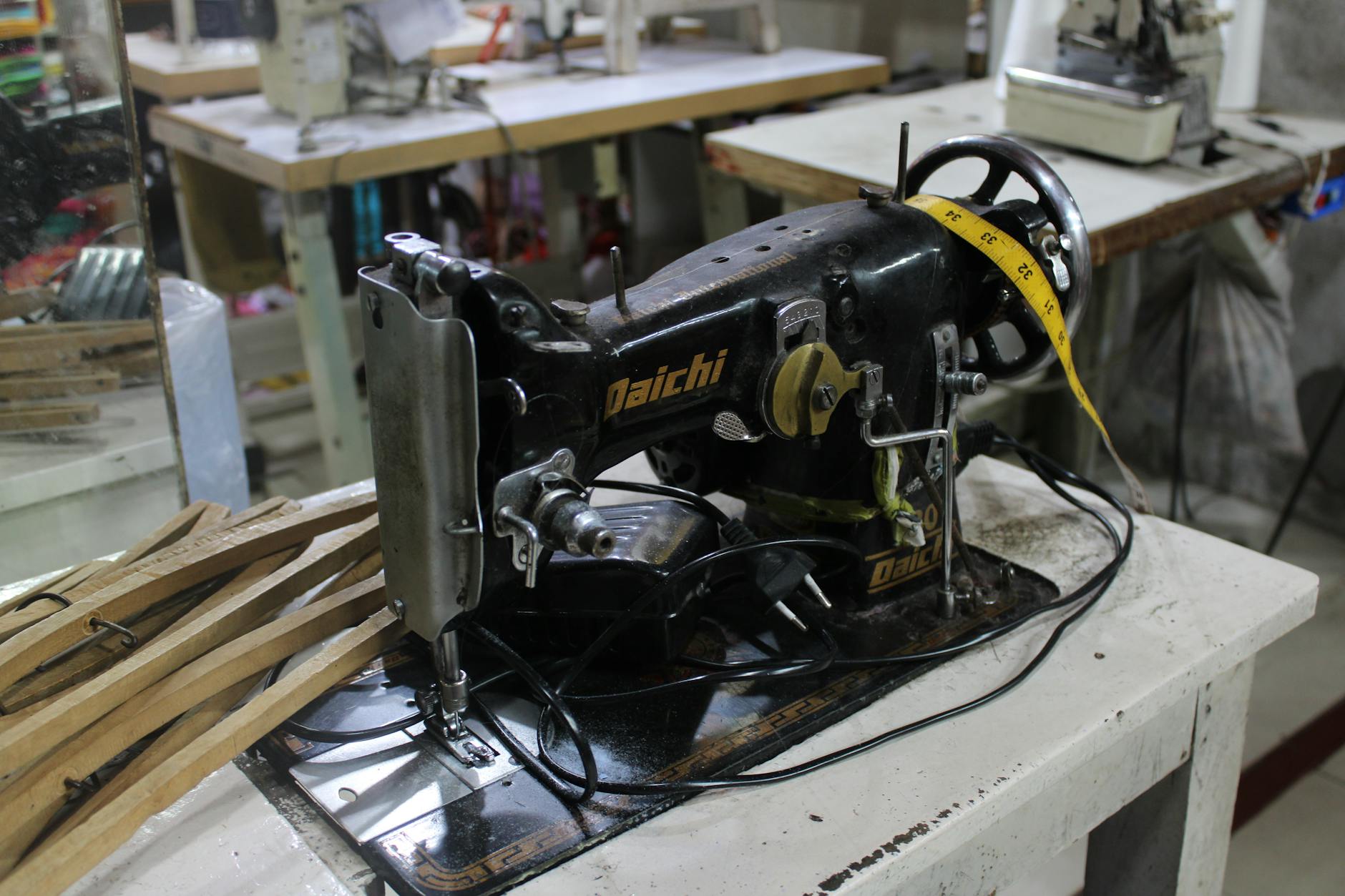
Back at the workshop, the alterations from the first fitting get implemented. Seams are ripped, pieces re-cut where the chalk marks demand, panels re-sewn. The lining starts going in. The buttonholes are cut and stitched (by hand at the better shops, by machine at the rest). The trousers get their hem and waistband finishing. The jacket gets its working sleeve cuffs if you ordered them. By the morning of Day 3, the suit is roughly 90% complete — wearable, but with the final pressing still ahead.
Hour 48 to Hour 49: Second fitting (90% complete)
You return again. The suit looks like a suit now. The fitting room session is shorter — fifteen to twenty-five minutes — because the major architectural questions have been resolved and you are now refining details. The trouser hem length is finalized. The sleeve length is double-checked with the shirt cuff showing the correct quarter-inch. Any small adjustments from the first fitting are reviewed: did the chest ease feel right, is the lapel sitting flat, is the back panel smooth across the shoulder blades.
If the first fitting was done well, the second fitting is mostly confirmation. If the first fitting was rushed, the second fitting becomes another major surgery and you start hoping there will be time for a third before you fly out.
Hour 49 to Hour 72: Final finishing
Back at the workshop one more time. Final hem stitching, final pressing on the steam form, the buttons get sewn on if they weren't already, the labels go in, the suit gets its final brush-down. By the time you arrive on Day 4 morning (or late Day 3 afternoon, depending on when you started), the garment is ready.
Hour 72: Pickup, final adjustments, and walking out
At pickup, you should put the suit on one more time. A good tailor will have you wear it for ten or fifteen minutes — sit, stand, raise your arms, walk around the shop. If anything genuinely needs adjustment (a half-centimeter on the trouser hem, a button moved a quarter inch), they will do it on the spot or within a few hours. Then you pay, you collect the bag, and you walk out with a suit that took roughly seventy-two clock hours and somewhere between twenty and thirty hours of skilled labor to make.
Why "24-Hour Suits" Are a Red Flag
There is a category of Hoi An shop that markets twenty-four-hour delivery as a feature. The honest version of what they are doing is collapsing the timeline above by removing the first fitting entirely. You arrive in the morning, give measurements, leave, and return the next morning to a finished suit with one combined fitting that doubles as the pickup. The cutter has guessed at the dozen adjustments that a basted-state first fitting would have caught, and they have committed those guesses to permanent finished construction.
The result is sometimes wearable. Often it is wearable but visibly off — slightly twisted shoulder, sleeves a quarter inch wrong, lapel that doesn't lie flat. Occasionally it is wearable and the customer doesn't notice because they have nothing to compare against. Almost never is it as good as the same shop's three-day work on a different customer.
The economics also don't work in the customer's favor. A real twenty-four-hour suit cannot have hand-stitched buttonholes, working cuffs, hand-finished lining details, or full canvas construction — there isn't time. So the shops offering this timeline are typically also using fused construction, machine buttonholes, and shortcut finishing. The suit feels stiff for the first two months and then the fused lining bubbles. By month six, the chest panel separates from the shell.
The honest twenty-four-hour Hoi An product is a rental-grade garment for an immediate event, and a few shops position it that way. Most don't — they sell it as the same product as a three-day suit. That is the misrepresentation the timeline creates.
Where Compression Honestly Works
There are legitimate ways to compress the timeline without sacrificing quality. None of them get you below 48 hours, but they can pull the seventy-two-hour version into a tight two-and-a-half-day window.
Send measurements before you arrive. If a shop offers an online self-measurement workflow (a guided app, a video walkthrough, a remote-order option), you can submit measurements two to three weeks before your trip. The cutter drafts the pattern and cuts the fabric before you land. You walk in on Day 1 to a basted suit ready for first fitting. This pulls the whole timeline forward by twenty-four hours.
Order a second suit at the second fitting, not the first. Many visitors place orders for three suits on Day 1 and then realize at the first fitting that the cut they specified isn't what they wanted. Ordering a second and third suit at the Day 2 fitting — once the first suit's cut is proven on your body — keeps the workshop's cutting day for those additional suits in parallel with your remaining fittings on the first.
Choose a simpler construction for one of the suits. A half-canvas summer suit needs less workshop time than a fully-canvassed winter wool. If you are ordering multiple pieces, pick the simpler one for the tighter timeline.
Confirm everything by WhatsApp before you arrive. Discuss fabric options, construction preferences, and rough budget over message in the week before your trip. The shop pre-pulls bolts for you. Hour 0 to Hour 1 collapses to thirty minutes because you have already decided most of what you wanted.
The Remote-Order Timeline (Three Weeks)
For visitors who can't fly to Hoi An or who only have transit days through Da Nang, remote ordering is the alternative. The timeline shifts but the labor doesn't disappear — it just spreads out across three weeks of asynchronous communication and shipping.
Day 0: Order placed. You select your fabric and construction online, pay your deposit, and submit a measurement set (usually through a guided self-measurement app or a video call with the shop). For shops with mature remote workflows, this is a forty-minute home process.
Days 1 to 5: Pattern, cut, basted construction. The cutter drafts your pattern, cuts the fabric, and assembles the suit to basted state — same five days of work the in-person customer's first twenty-four hours hides. Without your body in the room, the workshop adds extra cross-checks: the cutter or shop owner reviews the basted suit on a form against your photographs (front, side, back, full-length) before approving it for the next stage.
Days 6 to 12: Sewing and finishing. The basted construction goes through final sewing, lining, buttonholes, hemming, and pressing. The garment is photographed on a dress form for your remote review.
Days 13 to 14: Quality check and packaging. The shop sends you a video walk-around of the finished suit on a dress form set to your measurements. You confirm or flag any concerns. The suit is steamed, brushed, packed.
Days 15 to 17 to 21: International shipping. DHL or FedEx, three to five business days for most US, EU, and Australia destinations. You unpack the suit at home, try it on, and the shop schedules a video fitting check within a week of delivery. If anything genuinely needs adjustment, a local tailor in your city can handle most things at $40 to $150, or the suit can come back to Hoi An for the shop to fix at no charge plus shipping.
Total elapsed time: roughly three weeks from order to wearing. Roughly the same total skilled-labor hours as the in-person three-day version. The compression is in your travel calendar, not in the workshop.
Why Hoi An Is Faster Than Savile Row
A Savile Row bespoke suit takes ten to twelve weeks and runs four thousand pounds. A Hoi An custom suit takes seventy-two hours or three remote weeks and runs one hundred and fifty to five hundred dollars. The price difference is partly Vietnamese versus London labor cost, but the speed difference is structural and worth understanding.
In-house workshops with all-day cutters. A serious Hoi An shop has its cutters, sewers, and finishers in the same building, usually in the same room. There is no waiting for a sub-contracted tailor in another postcode to call back. The cutter who measures you can walk to the bench where your pattern is being drafted and answer a question in thirty seconds. Savile Row, despite its reputation, often outsources sewing to "outworkers" who collect work weekly. The handoff cycles add weeks.
Volume creates expertise. A busy Hoi An workshop cuts twenty to forty suits a week. The same cutter has hands on roughly twelve hundred suits a year, every year, for a decade. The pattern-drafting muscle memory that develops at that volume is not something a Savile Row cutter doing two suits a week ever quite reaches. The tradeoff is variability — Hoi An volume produces faster outcomes with marginally less obsessive finishing on individual seams. For most customers, the trade is worth it.
Lower stakes per garment, faster decision cycles. A Savile Row customer has waited a year for a fitting and is not making split decisions. A Hoi An customer is in town for three days and the shop is comfortable making fast judgment calls. Some of those calls go wrong; most go right. The speed exists because the workshop and the customer both accept the rhythm.
No fitting-room queue. A Savile Row appointment is one customer at a time, with a hand-craft schedule that doesn't compress. A Hoi An shop has multiple fitting rooms, multiple cutters, and a workflow that moves four customers per cutter per day. Your fitting is not blocking ten other customers' fittings, so the cutter has more flexibility to schedule you tomorrow morning at 9am rather than Tuesday next week.
What Goes Wrong When the Timeline Is Compressed
Real failure modes from compressed timelines, drawn from a decade of customer reports and our own intake of customers who arrived from other shops:
- The shoulder pitch is wrong because the cutter never saw the basted jacket on the customer's actual body. The customer has sloped shoulders or one shoulder lower than the other, and the standard pattern's symmetric assumption was carried into the finished suit. The shoulder line looks fine on the hanger and visibly twisted in any photograph.
- The chest pulls when the customer reaches forward. The first-fitting check for armscye ease was skipped. The suit is wearable for cocktail standing but uncomfortable for any seated work or driving.
- The trousers are an inch too long or short because the hem was committed before the customer tried them on with the shoes they planned to wear. The customer either has them altered by their local tailor at home (adding $30 to $60 they didn't budget) or wears the suit with the wrong break.
- The lapel doesn't roll properly because the canvas wasn't given time to settle and shape against the chest. This is the visible giveaway that distinguishes a hand-pressed three-day suit from a rushed one.
- The customer doesn't notice anything is wrong until they get home. Hoi An's flattering shop lighting and full-length mirrors hide a lot. Three weeks later, in their bedroom mirror at home, the issues become obvious — and the suit is now an inconvenient flight away from the shop that made it.
The pattern across all of these is the same: the steps that exist in the seventy-two-hour timeline exist because they catch problems before the suit is finished. Removing them doesn't remove the problems, it just transfers them onto the customer.
Our Recommendation on Timeline
If you are reading this guide while still planning your trip, the actionable advice is straightforward.
- Allow three full days minimum in Hoi An if you want one or two custom suits. Four days if you want three or more. Two days is a stretch and you will be making compromises. One day means you are buying a rental-grade garment, regardless of what the shop calls it.
- Contact your chosen shop a week before you arrive. Discuss fabric, construction, and budget over WhatsApp. The shop pre-pulls bolts and reserves cutter time. You walk in to thirty minutes of measurements rather than two hours of decision paralysis.
- If your trip won't accommodate three days, order remotely instead. Three weeks asynchronous beats two days compressed every time. Several Hoi An shops including ours run remote workflows where you can self-measure from home. Browse the Nathan Tailors menu for fabric and pricing if remote ordering is the path you choose.
- Build in a buffer day. The fittings sometimes get rescheduled. Your travel sometimes gets delayed. The buffer day is what separates a relaxed tailoring trip from a stressed one.
The clock is real, but the trade-offs are not symmetric. You can wait three weeks instead of three days and lose nothing. You cannot compress three days to thirty-six hours and gain anything except a worse suit. The shops promising otherwise are selling speed at the expense of fit, and the customer is the one who lives with the result.