Stop one — the port
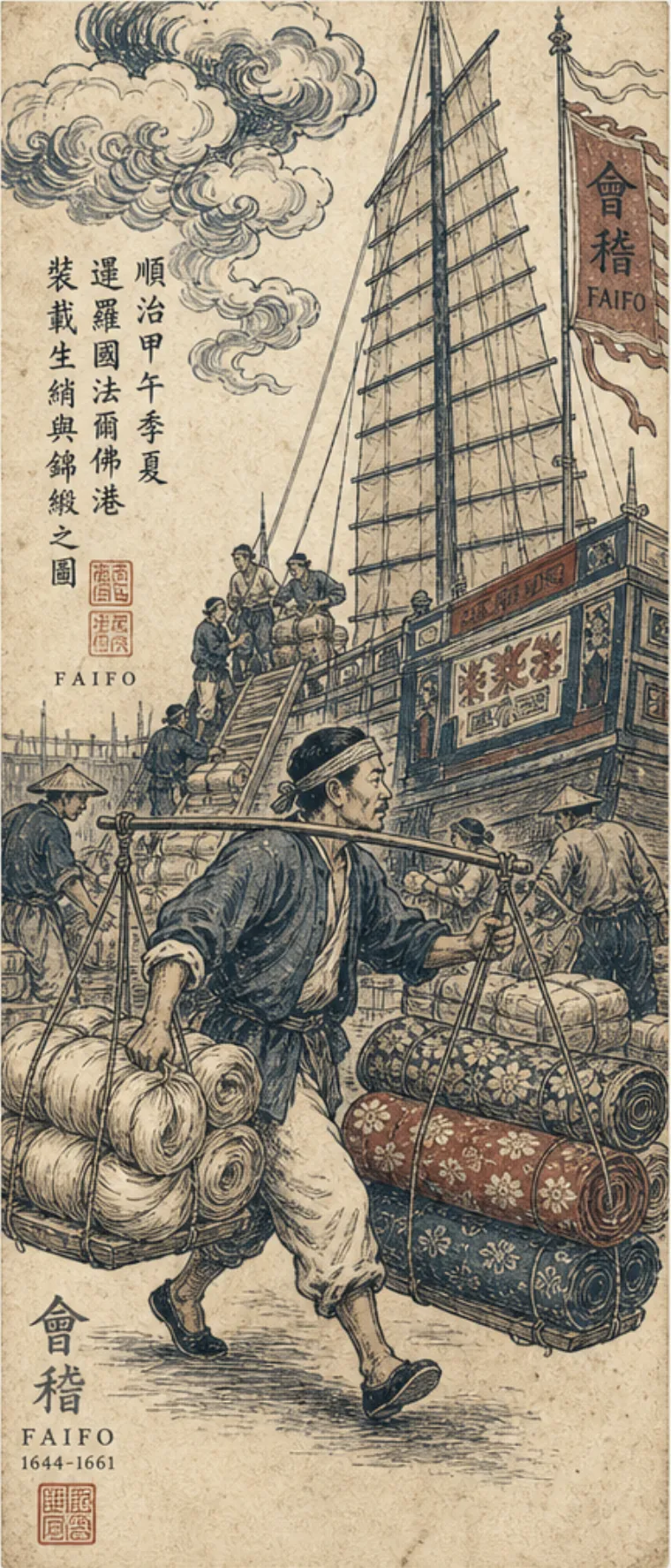
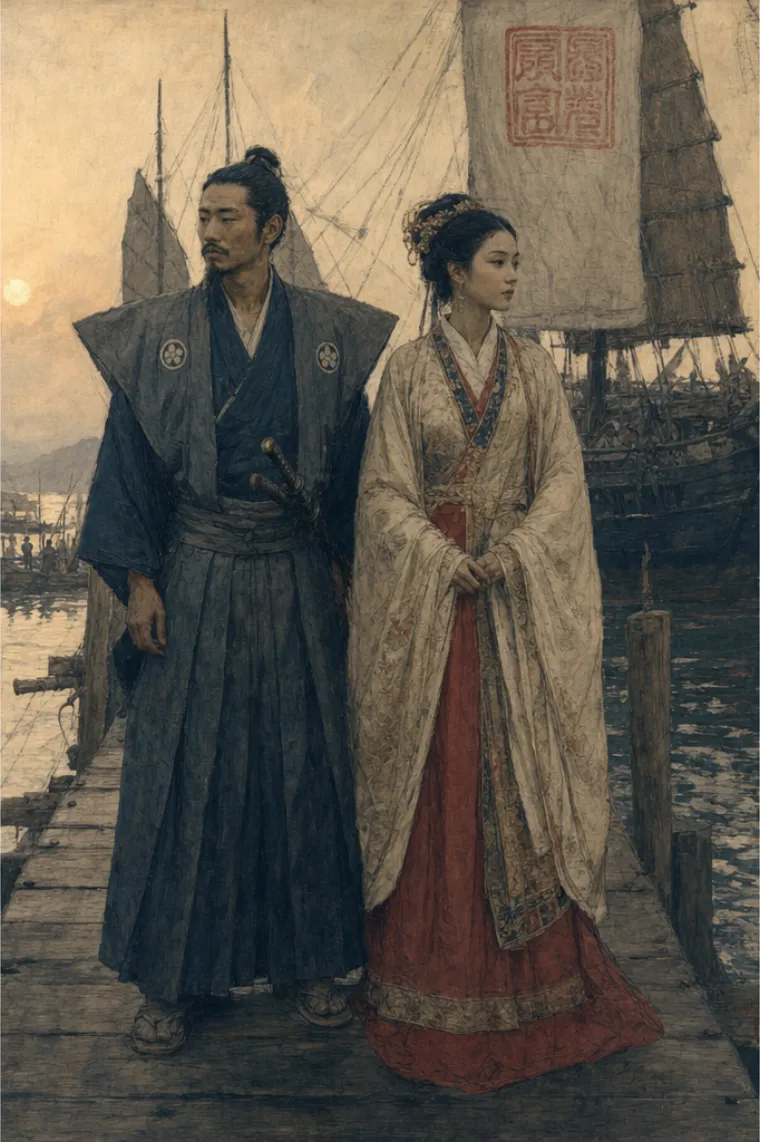
Faifo, 1635: The Year the Silk Ships Stopped Coming
How a stretch of riverbank in Quảng Nam became a clearinghouse for Japanese, Chinese and Portuguese silk between roughly 1593 and 1635 — and what stayed behind.
→ Read the piece
Hội An used to be called Faifo — a silk port for four hundred years.
Four hundred years of cloth, in the town you’re standing in.
Pulled from temple inscriptions, river-village ledgers, and the boring archives most travellers never see — so the suit you take home has a story you can actually tell. Kept by a small Hội An tailor. Come in if you like what you read.
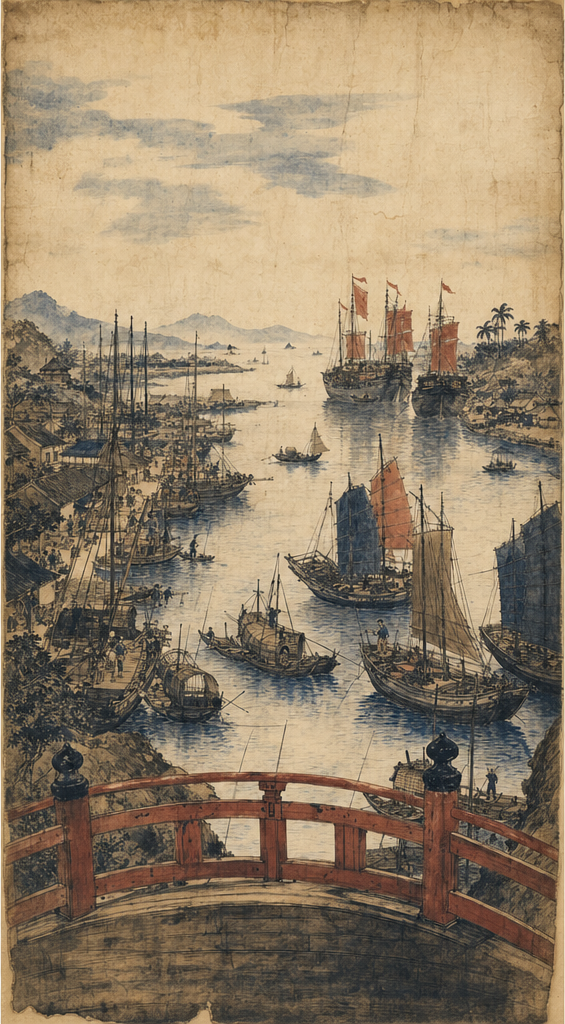
A timeline of cloth in Hội An
Read top to bottom. Each entry is a stop in the exhibit; the ones marked → open a longer piece in the library.
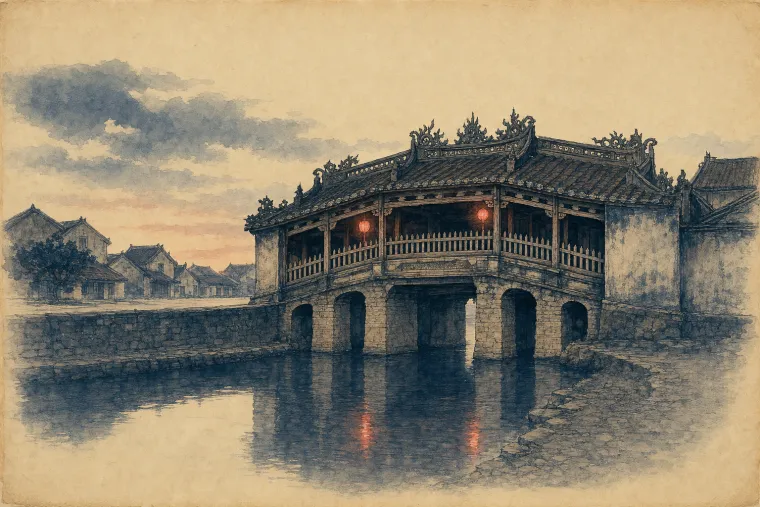




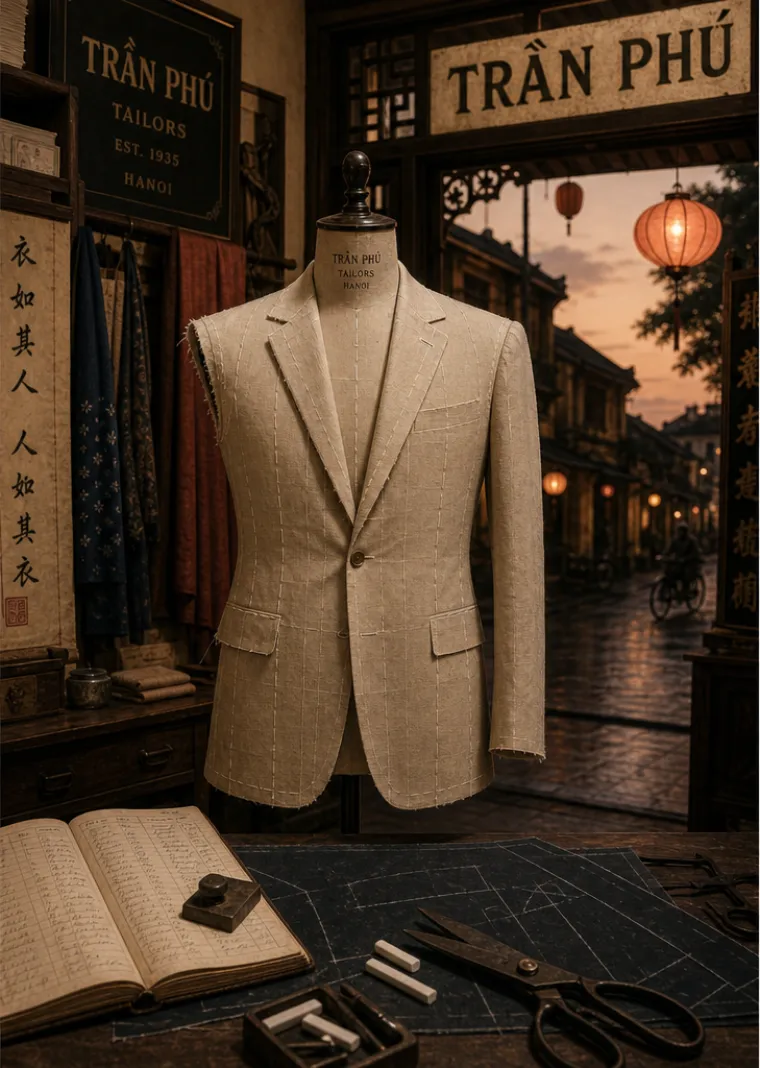
A guided reading path
Each is a short walk through one chapter of the timeline — written slowly, sourced where we can, marked where we can't.
Stop one — the port
How a stretch of riverbank in Quảng Nam became a clearinghouse for Japanese, Chinese and Portuguese silk between roughly 1593 and 1635 — and what stayed behind.
→ Read the piece
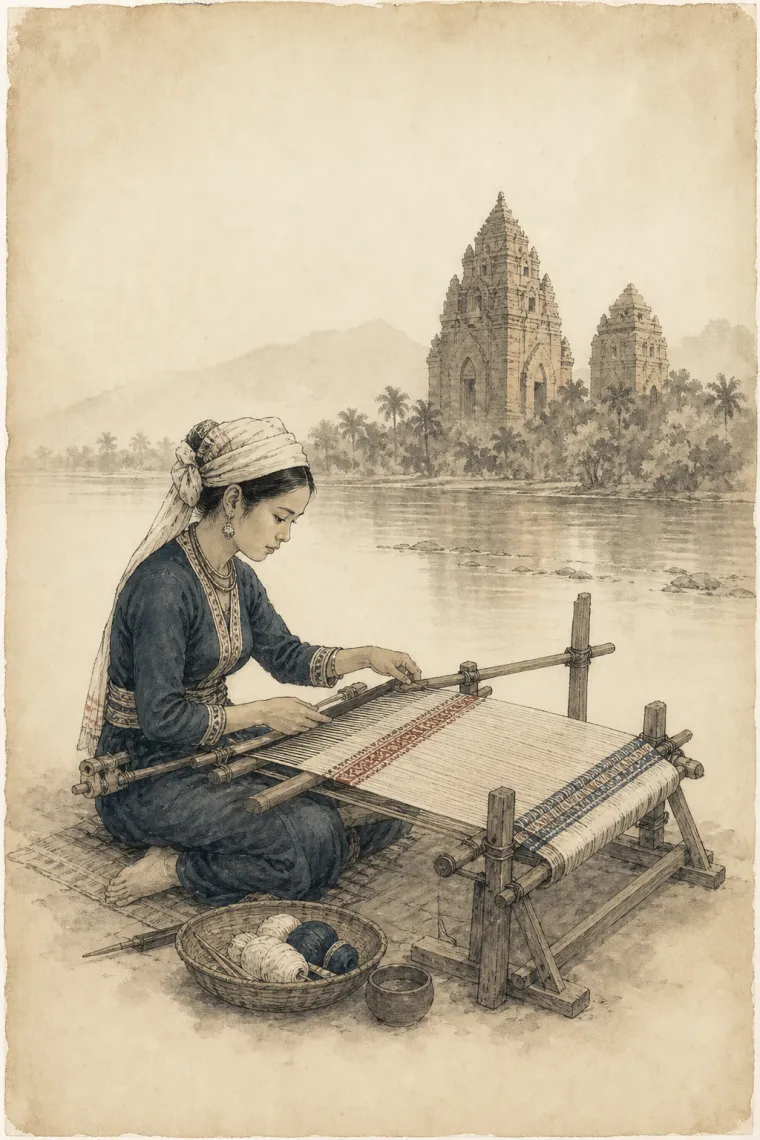
Stop two — the loom
Twenty kilometres up the Thu Bồn from Hội An, a Duy Xuyên weaving village has been turning mulberry leaves into court silk for roughly five centuries.
→ Read the piece
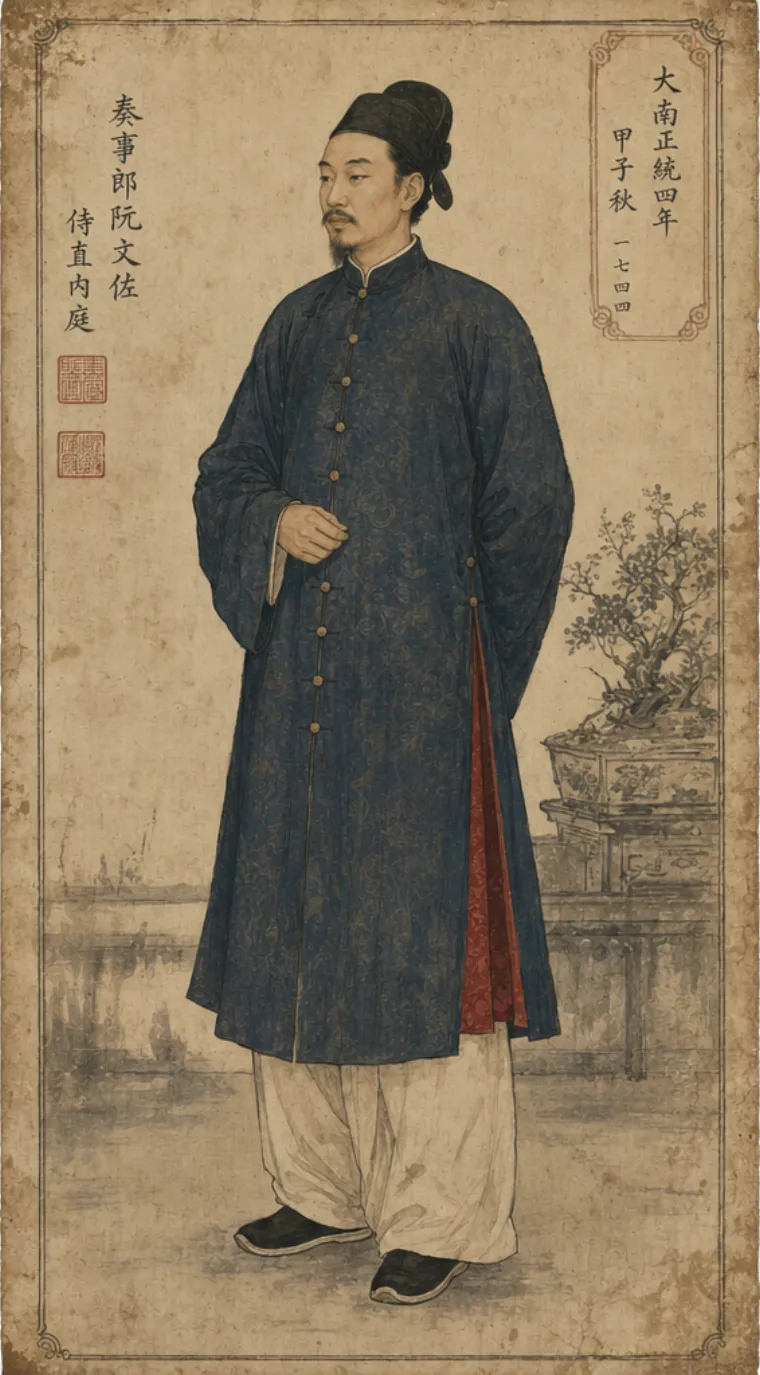
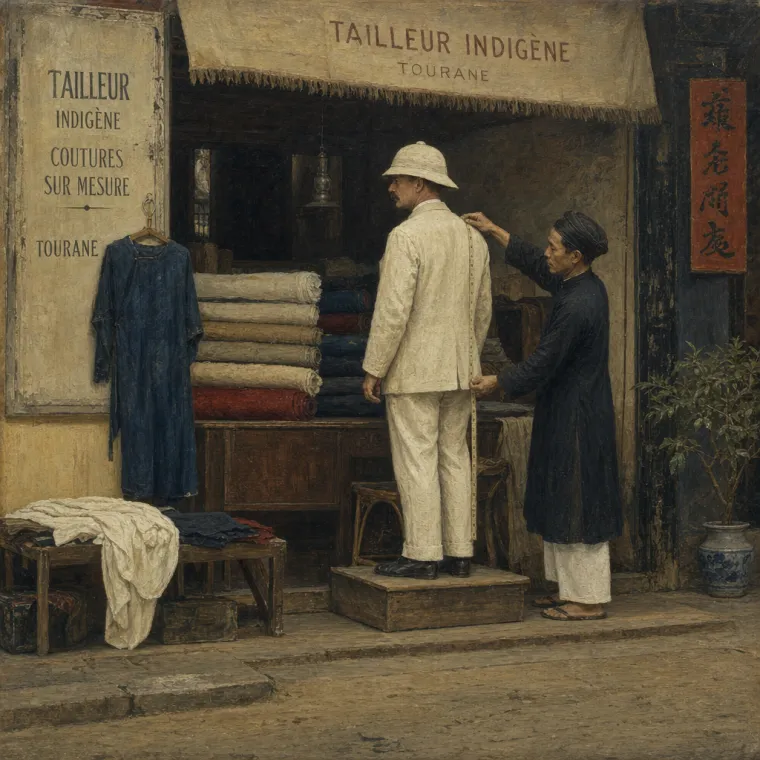
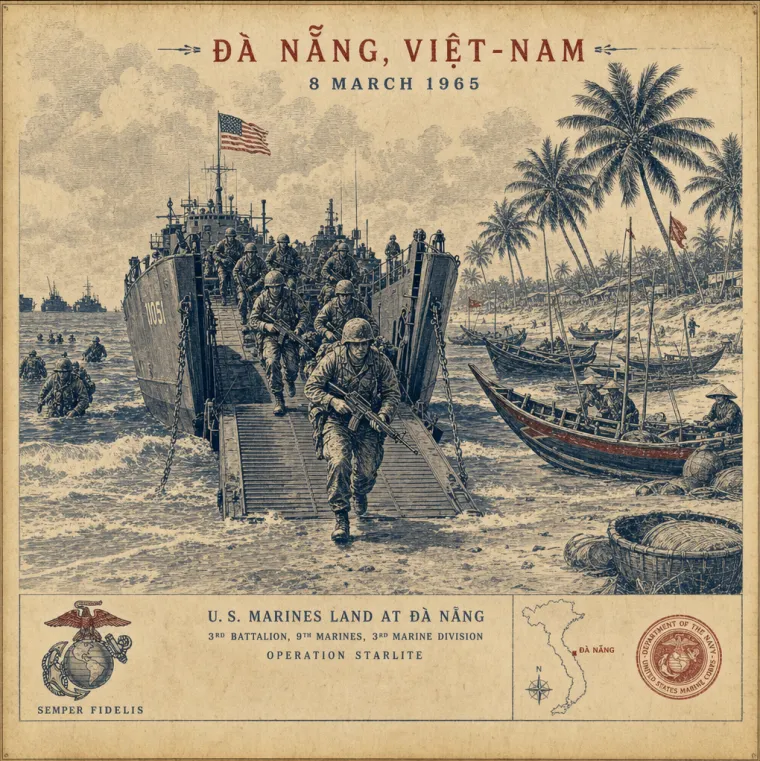
Stop three — the cut
The muscle memory of cutting a Western suit in Hội An is older than the post-1999 tourism boom — it runs through Lord Nguyễn Phúc Khoát's 1744 dress decree, French colonial offices in Đà Nẵng, and the 1965 American landing.
→ Read the piece
A note from the curator
If, after the library, you'd like to see a real shop, we keep one ourselves.
The shop that keeps the library
A small, family-run house on Trần Hưng Đạo street in the old town, cutting bespoke suits, shirts, and dresses since 2010. We keep this library because we read these sources ourselves before we cut a jacket — and we wanted somewhere to put what we found. If you read something here that interests you, come in and ask about it.
Disclosure: this library is kept by Nathan Tailors. We’ve also included market-wide pricing and tips below so the page is useful whichever Hội An tailor you choose.
Beyond Suits
Most visitors don’t stop at one suit. Here are the eight most popular custom items Hoi An tailors make — and what to expect.
The #1 reason visitors come to Hoi An tailors. Two-piece or three-piece, in wool or linen, made to your exact measurements.
Cotton or linen, fitted to your exact neck and sleeve measurements.
Cocktail dresses, evening gowns, jumpsuits — any design you bring.
Vietnam's traditional garment. Beautiful in silk for special occasions.
A Hoi An classic. Lightweight mulberry silk sets from $35.
Wool or cashmere overcoats — perfect to bring home for winter.
Get 3–4 pairs made for less than one pair of designer chinos.
Shoes, bags, belts, and wallets from Hoi An's leather workshops.
The Process
Plan at least 3 full days for your Hoi An suit. Here’s what a typical tailoring timeline looks like.
Browse fabrics, discuss your vision, and get measured. A good Hoi An tailor will advise on fabric weight, color, and style for your climate and occasion. First cut begins same day.
Try on the basted garment. Check shoulder line, chest drape, sleeve length, and trouser break. Mark adjustments — this fitting is the most important step in the process.
The finished suit is pressed and presented. Make any last tweaks — a good tailor will adjust buttons, hem, or tapering on the spot. Walk out with your custom Hoi An suit.
Market Prices
Custom suit prices in Hoi An range from $80 to $800+, depending on fabric quality and construction. Here is what you will actually pay in 2026.
$80 – $150
$150 – $350
$350 – $800+
| Item | Budget | Premium |
|---|---|---|
| Two-piece suit | $80–$150 | $350–$800 |
| Dress shirt | $15–$25 | $40–$80 |
| Trousers | $20–$40 | $60–$150 |
| Overcoat | $100–$180 | $300–$600 |
| Women's dress | $40–$80 | $120–$350 |
| Ao dai | $30–$50 | $80–$200 |
| Silk pajamas | $20–$35 | $50–$100 |
| Leather shoes | $30–$60 | $80–$200 |
Prices surveyed across 30+ Hoi An tailor shops, March 2026. Your actual price depends on fabric choice, garment complexity, and negotiation.
Insider Tips
Practical advice from a Hoi An tailor with 15 years of experience — whether it is your first custom suit or your tenth.
Never rush a custom suit. One-day turnaround shops sacrifice quality for speed. Book your Hoi An tailor visit at the start of your trip.
Read recent Google reviews. Contact your tailor via WhatsApp beforehand to discuss styles and confirm availability.
Save Pinterest boards or screenshots of suits you like. Hoi An tailors work much better from visual references than verbal descriptions.
Take photos at each fitting for comparison. If you see something wrong, speak up — it's much easier to fix early in the process.
Wear the shoes and undershirt you plan to pair with your suit. This ensures accurate trouser length and shirt fit.
Prices are somewhat flexible, especially for multiple items. But don't push too hard — extreme discounts often mean fabric downgrades.
Request to see the fabric bolt and check the selvedge edge. Real Italian wool will have the mill name woven into the edge.
Suits fold well in garment bags. Ask your tailor for one. If ordering many items, consider shipping them home separately via DHL.
Common Questions
Custom suits in Hoi An range from $80–$150 at budget shops using synthetic-blend fabrics, $150–$350 at mid-range tailors using imported wool blends, and $350–$800+ at premium tailors using pure Italian or English wool. The sweet spot for quality is $200–$400, where you get genuine wool fabric, hand-finished details, and proper canvassing.
Most tailors need 3–5 days for a suit, including 2–3 fittings. Shirts take 1–2 days. Some shops promise 24-hour turnaround, but this usually means rushed construction and fewer fittings. Plan at least 3 full days in Hoi An if you want a well-made suit with proper adjustments.
Yes — if you choose the right tailor. A $300 custom suit in Hoi An uses comparable fabric to a $1,200+ suit in Western countries, and you get it made to your exact measurements. The key is avoiding tourist-trap shops that use cheap fabric and rush the process. Research tailors beforehand, check recent reviews, and allow enough time for multiple fittings.
Hoi An tailors make much more than suits. Popular items include custom dress shirts, chinos and trousers, overcoats and blazers, women's dresses and jumpsuits, Vietnamese ao dai, silk pajamas, and leather shoes or bags. Many visitors order 3–5 items to make the trip worthwhile.
Look for recent Google reviews (within the last 6 months), ask to see and feel the fabric before ordering, confirm the number of fittings included, check that they do alterations on-site rather than outsourcing, and avoid shops that push you to order immediately. The best tailors are booked in advance, so contact them before arriving in Hoi An.
Most reputable tailors offer international shipping via DHL or FedEx, typically costing $30–$60 depending on the weight and destination. This is useful if you order additional items after returning home or need post-delivery adjustments. Some tailors keep your measurements on file for remote reorders.
For tropical climates, choose lightweight wool (Super 110s–130s) or a wool-linen blend. For year-round wear, a mid-weight pure wool (Super 100s–120s) works best. Avoid polyester blends marketed as 'Italian fabric' — always ask to see the fabric bolt and check the selvedge edge for the mill name. Reputable tailors stock fabric from mills like Vitale Barberis Canonico, Loro Piana, or Dormeuil.
A proper custom suit requires 2–3 fittings: the first to check the initial cut and silhouette, the second for refined adjustments to shoulders, chest, and length, and a third (if needed) for final tweaks. Be wary of tailors offering only one fitting — this usually results in a poor fit.
Generally no. Good tailors stock quality fabrics and know how each one behaves during cutting and sewing. Bringing your own fabric can cause issues with shrinkage and handling, and most tailors won't guarantee the result. Instead, spend time choosing from the tailor's own fabric selection — it's part of the experience.
The best months are February through April and August through October, when the weather is pleasant and tailors are less rushed. Avoid December–January (peak tourist season) when shops are overwhelmed and may rush your order. The shoulder seasons give you more personal attention and often better prices.