From the Library
From Áo Ngũ Thân to Notch Lapel: Hội An's Long Apprenticeship in Western Cutting
The muscle memory of cutting a Western suit in Hội An is older than the post-1999 tourism boom — it runs through Lord Nguyễn Phúc Khoát's 1744 dress decree, French colonial offices in Đà Nẵng, and the 1965 American landing.
May 25, 2026
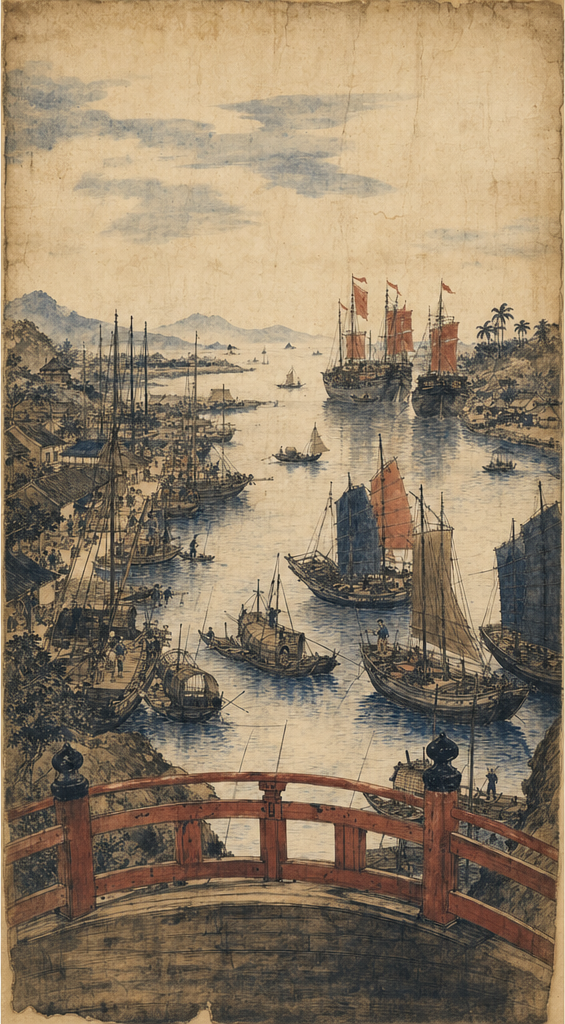
The story Westerners tell about Hội An tailoring usually starts in 1999, the year UNESCO inscribed the old town. That is the wrong starting line by about two hundred and fifty-five years.
The right starting line is 1744. In that year Lord Nguyễn Phúc Khoát, ruling Đàng Trong from Phú Xuân (modern Huế), issued a dress decree that broke with the áo giao lĩnh of the Trịnh court in the north. He standardised the áo ngũ thân — a five-panel tunic with a standing collar, right-side button placket, and narrow sleeves, worn over two-tube trousers. The cut was self-consciously southern, and self-consciously political: it visually distinguished his subjects from the rival Trịnh in Hanoi.
“Áo ngũ thân lập lĩnh, cài khuy bên phải, tay áo hẹp, mặc cùng quần hai ống.”
A five-panel tunic with standing collar, buttons fastened on the right, narrow sleeves, worn with two-tube trousers.
— The technical signature of the 1744 reform, as Vietnamese costume historians summarise it from Lê Quý Đôn's Phủ Biên Tạp Lục (1776).
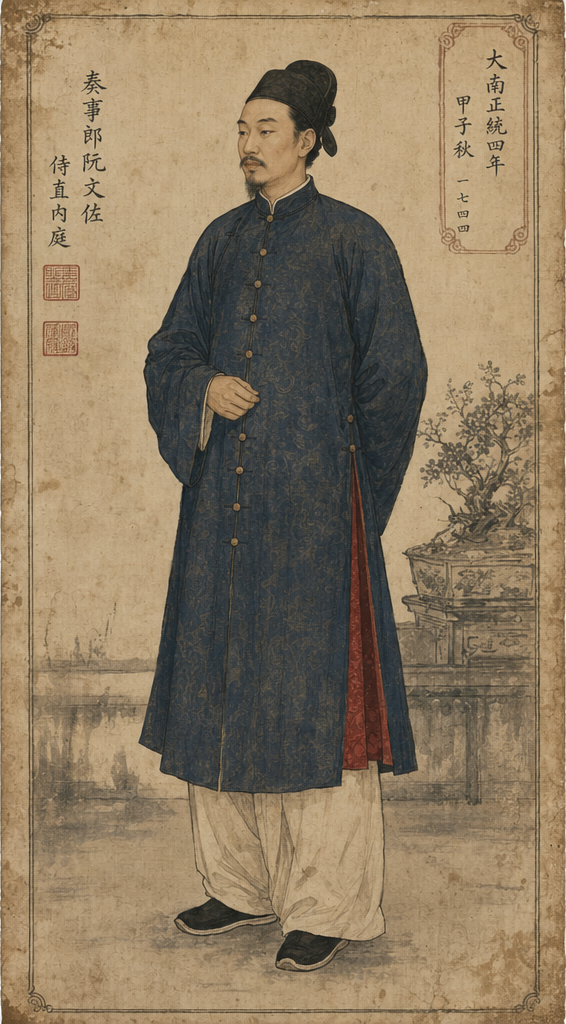
That cut matters for tailoring history because of three things it already contained: a structured collar, a button placket on the right, and a fitted sleeve set into a panel system. None of those are European. All of them are the muscle-memory grammar that a tailor needs in order to later cut a Western jacket. When the French arrived, Vietnamese tailors in central Vietnam were not learning to construct shaped garments from zero — they were learning a new vocabulary on top of an old one.
The French arrival in central Vietnam was administrative before it was sartorial. Tourane — Đà Nẵng — was ceded as a French concession in 1888, and the Annam protectorate covered Quảng Nam. With the résidents, customs officers, missionaries and traders came demand for linen suits, white shirts, and the colonial uniform of the tropics. The Nhân Dân Online piece on Hội An tailoring summarises the period plainly: by the early twentieth century, European-style tailoring shops had begun to appear in the old town, working alongside the áo dài cutters who had served the local market for generations.
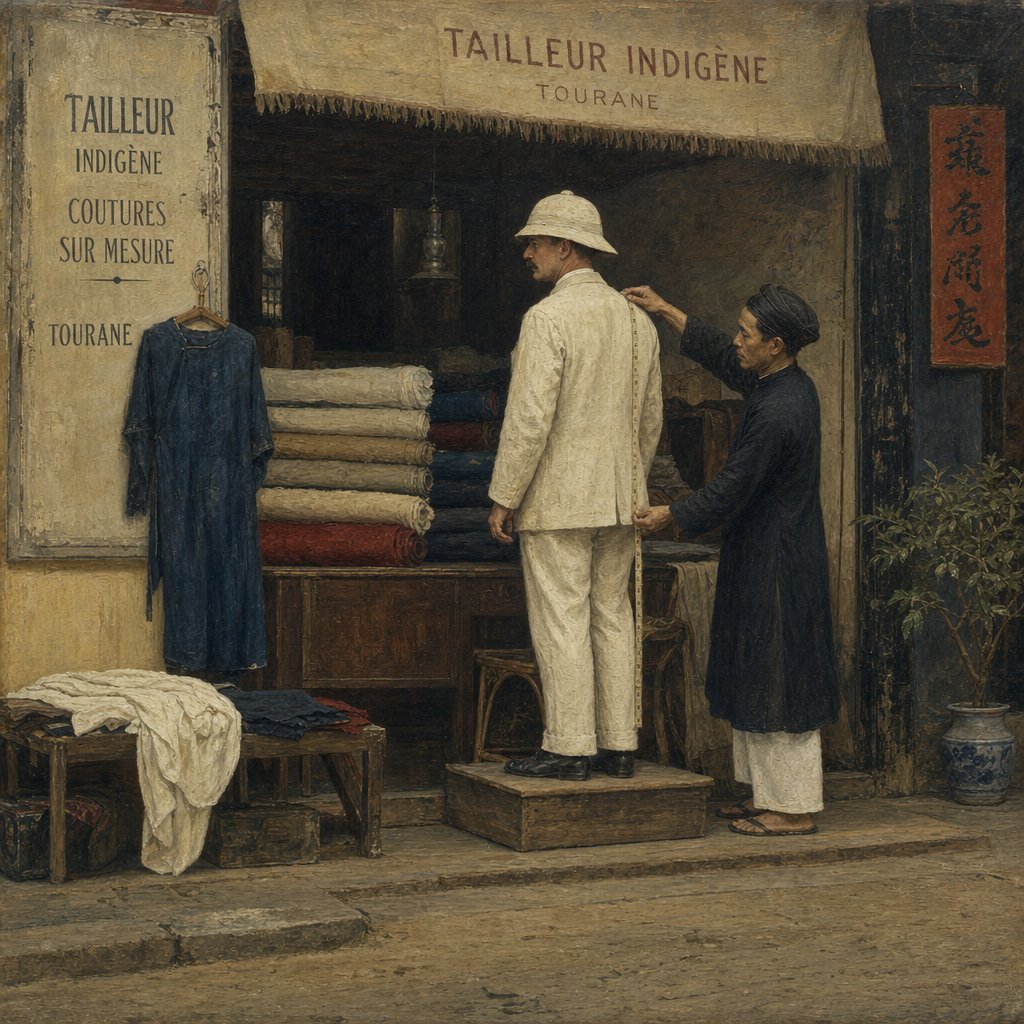
The áo dài itself was changing in parallel. The reformist designer Nguyễn Cát Tường — better known as Cát Tường or Le Mur — pushed the áo ngũ thân toward a slimmer, French-influenced silhouette in 1930s Hanoi, and the new line travelled south. By the late colonial period the typical central-Vietnamese tailoring shop was bilingual in cut: it could produce a fitted áo dài in the morning and a single-breasted linen jacket in the afternoon, often on the same hand-cranked Singer.
The Second World War, the Japanese occupation, the August Revolution, the Indochina War — those years compressed and dispersed the trade, but did not erase it. The next forcing function was American.
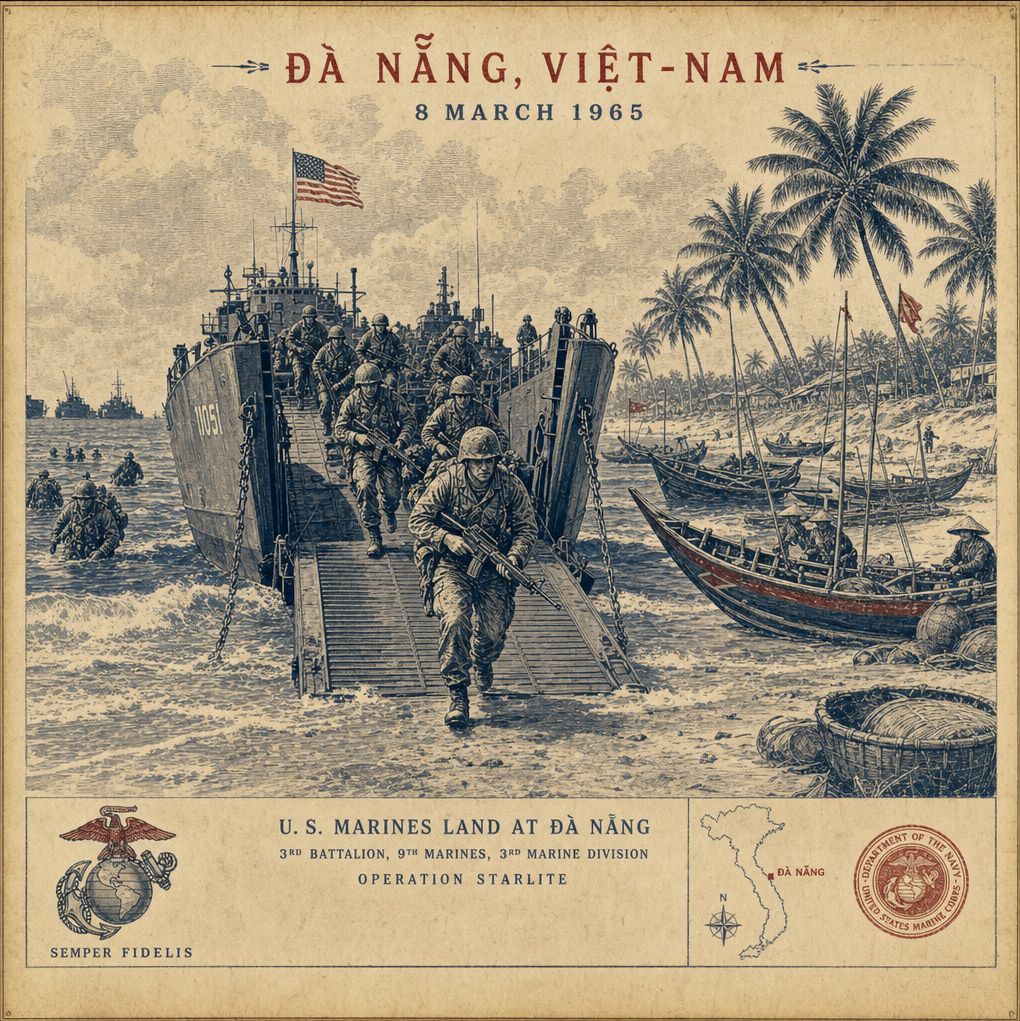
On 8 March 1965, the 9th Marine Expeditionary Brigade landed on the beach north of Đà Nẵng — the first US ground combat units committed to Vietnam. Đà Nẵng airbase became one of the busiest airfields in the world. The city's economy reorganised around the foreign presence: warehouses, bars, laundries, photo studios, and small services serving GIs on local R&R and in-country leave. Contemporary Vietnamese accounts describe sidewalks lined with stalls selling cigarettes, rations and surplus uniforms, with civilian laundries pressing fatigues by the kilo.
The specific claim that Hội An or Đà Nẵng shops ran a roaring made-to-measure suit trade for American servicemen between 1965 and 1973 is the kind of thing repeated in local guidebooks but harder to document in primary sources we could retrieve. What is documented is the surrounding infrastructure: a large, sustained American customer base on the coast for eight years, sitting twenty-five kilometres from Hội An, in a province whose tailors had already been cutting Western jackets for two generations. The likeliest reading — pending better archival work — is that GI patronage accelerated a trade that already existed, rather than founding it.
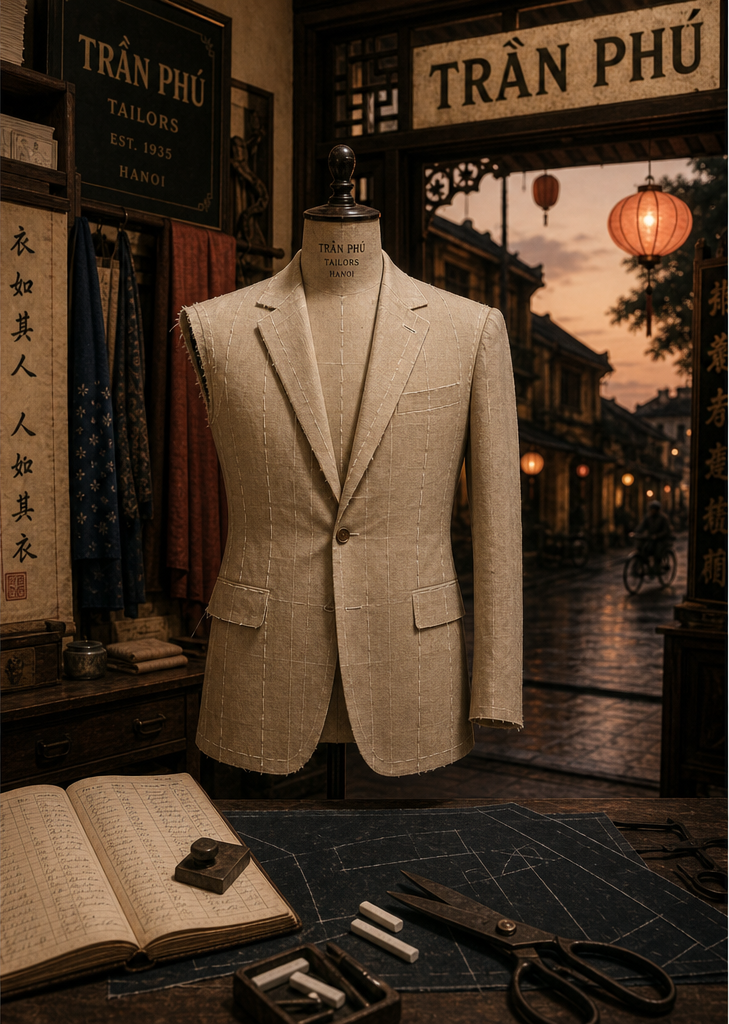
“The tailoring profession in Hội An developed quite early, as the city was once a bustling trading port and a key link in the 'Silk Road by the Sea' during the 16th and 17th centuries.”
The tailoring profession in Hội An developed quite early, as the city was once a bustling trading port and a key link in the 'Silk Road by the Sea' during the 16th and 17th centuries.
— Nhân Dân Online's own framing — a Vietnamese state outlet placing the origin of the trade four hundred years before the tourism boom.
After 1975, the foreign customers vanished for nearly two decades. The shops that survived survived on local work — uniforms, school clothes, áo dài. The reopening came slowly through the 1990s, and then the UNESCO inscription in 1999 turned a sleepy trade back into a tourism trade.
What this longer arc means in practice: when a visitor walks into a Trần Phú shop in 2026 and a cutter pins a half-canvas jacket on them in under fifteen minutes, that fluency is not improvised. It rests on a five-panel collar standardised in 1744, on linen-jacket commissions taken in colonial Tourane, on a generation of cutters who learned to read American sizing in the late 1960s, and on the daughters and grandsons of those cutters who reopened the shopfronts after Đổi Mới.
The work has been here a long time. The visitors are the new part.
Sources
- 1.Lê Quý Đôn, *Phủ Biên Tạp Lục* (1776), passages on Đàng Trong dress reform under Nguyễn Phúc Khoát; cited in Vietnamese scholarship on áo ngũ thân.(unverified)
- 2.Wikipedia (English), ‘Áo dài,’ on the 1744 Nguyễn Phúc Khoát decree. Used as secondary index pointing to Lê Quý Đôn.
- 3.Đông Phong, ‘Trang phục cơ bản thời Nguyễn (1): Ngũ thân, Áo tấc, Tứ thân.’ dongphong.store, accessed 2026-05-25.
- 4.Nhân Dân Online, ‘Experience of tailoring in the ancient city of Hoi An.’ en.nhandan.vn, accessed 2026-05-25.
- 5.War History Network, ‘8 March 1965: The Landing at Da Nang.’ warhistorynetwork.com, accessed 2026-05-25.