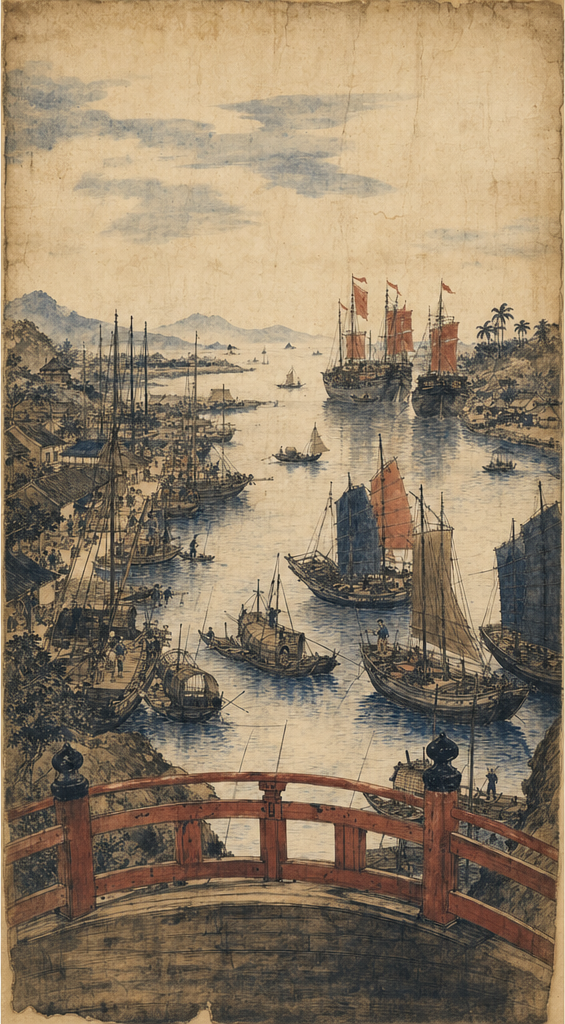
An ongoing archive of Hội An tailoring history.
Cloth merchants and their ports, the Chăm and Đại Việt looms that fed them, the French-era cutters who recombined the patterns, and the family workshops that carry the trade today. We assemble what we can find, cite what we can verify, and mark plainly what we cannot.
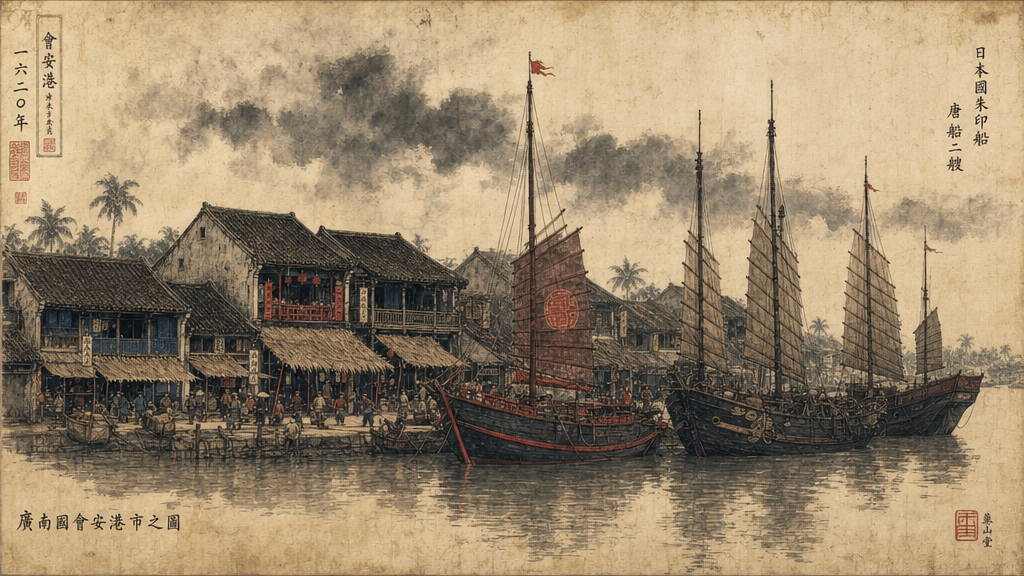
Faifo, 1635: The Year the Silk Ships Stopped Coming
How a stretch of riverbank in Quảng Nam became a clearinghouse for Japanese, Chinese and Portuguese silk between roughly 1593 and 1635 — and what stayed behind.
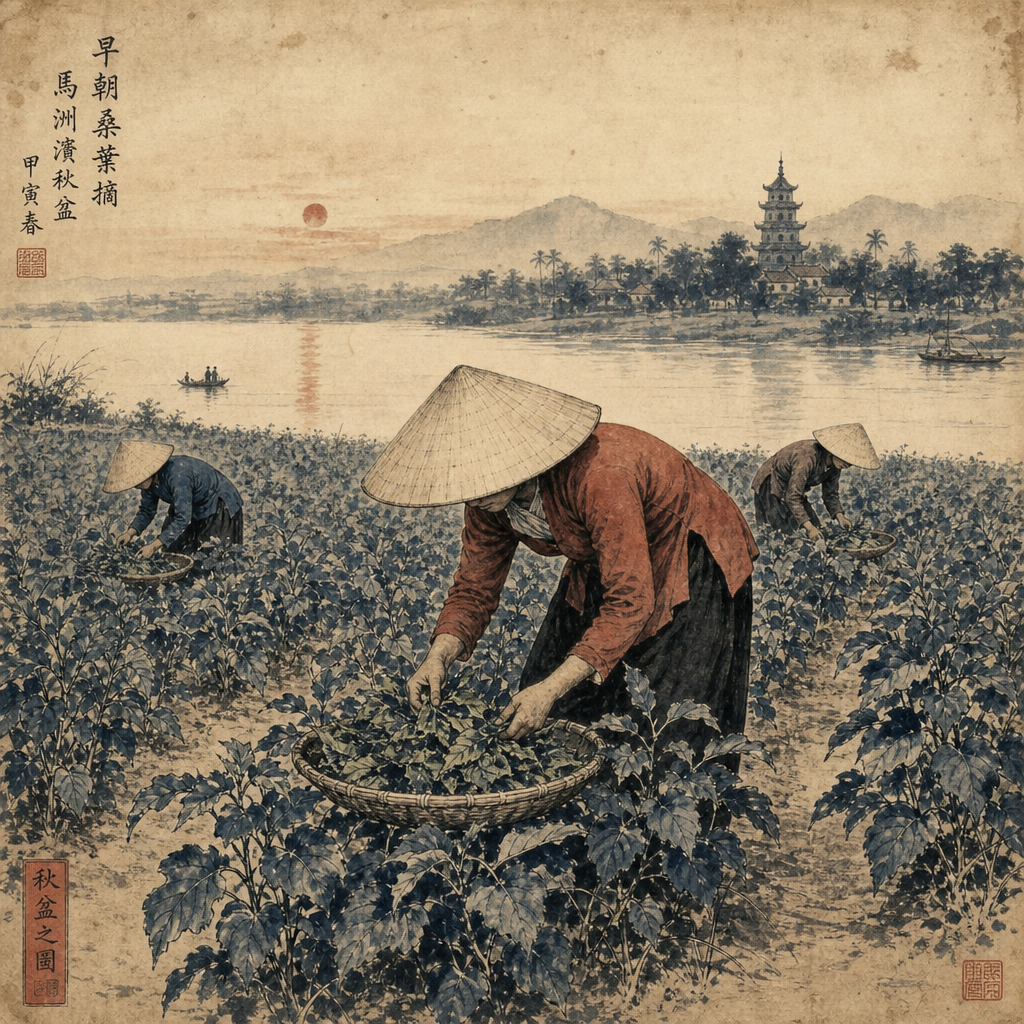
Mã Châu: The 20-Kilometre Supply Chain Behind Faifo's Silk
Twenty kilometres up the Thu Bồn from Hội An, a Duy Xuyên weaving village has been turning mulberry leaves into court silk for roughly five centuries.
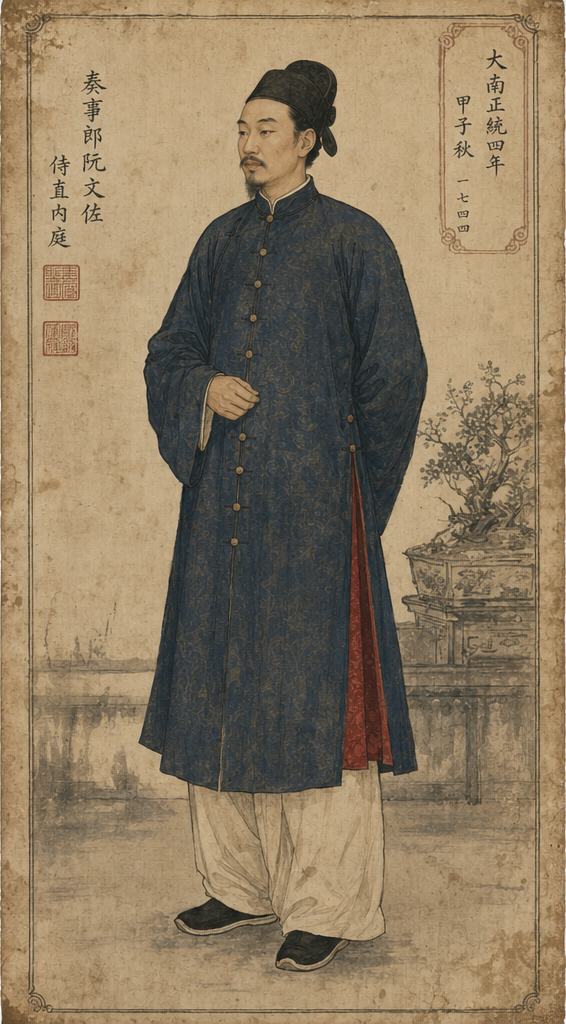
From Áo Ngũ Thân to Notch Lapel: Hội An's Long Apprenticeship in Western Cutting
The muscle memory of cutting a Western suit in Hội An is older than the post-1999 tourism boom — it runs through Lord Nguyễn Phúc Khoát's 1744 dress decree, French colonial offices in Đà Nẵng, and the 1965 American landing.