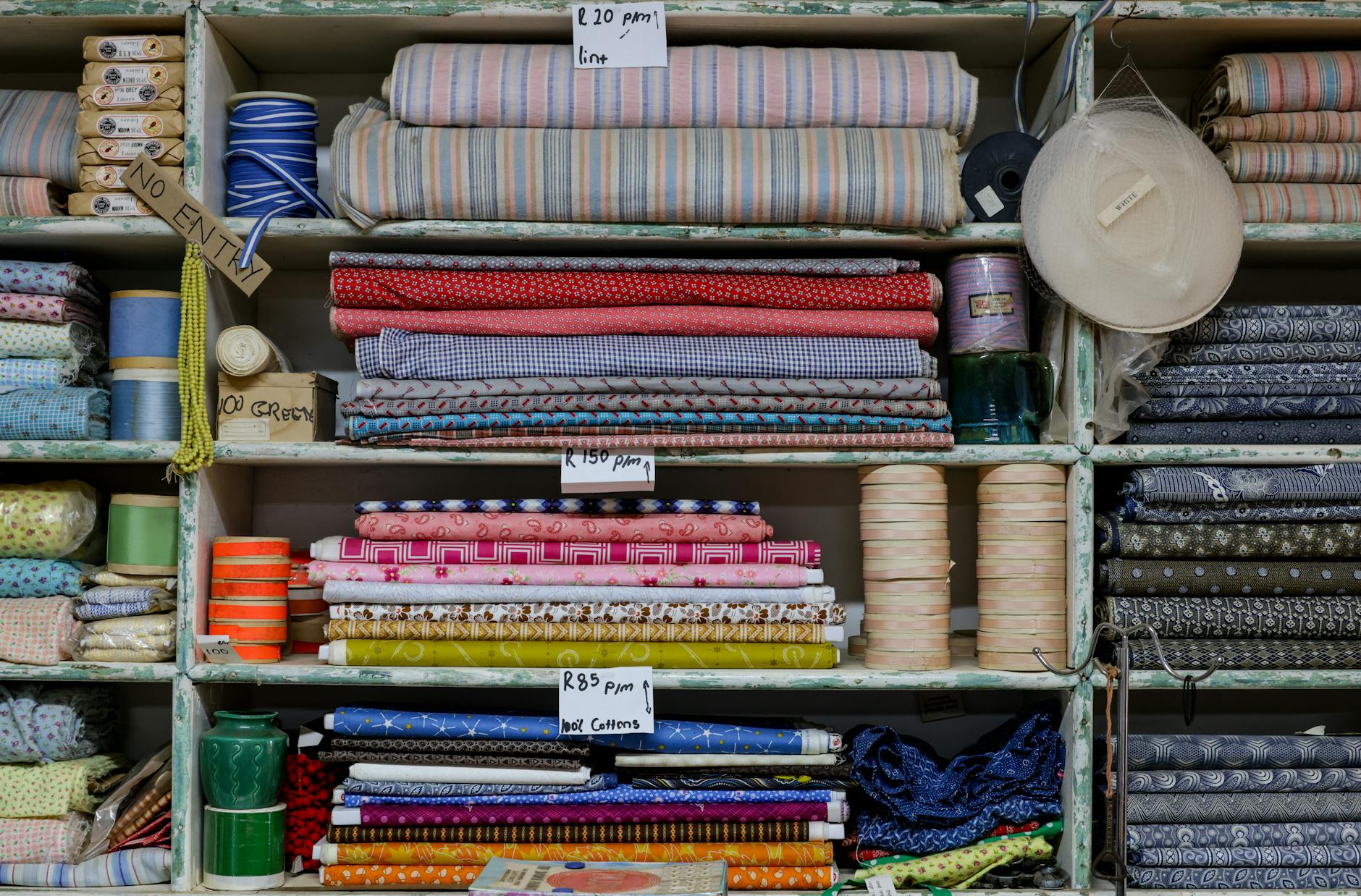
More money is wasted on the wrong suit fabric than on any other tailoring decision. A customer walks into a Hoi An shop, sees "Super 150s Italian wool" on a label, assumes higher is better, pays a premium, and ends up with a suit that pills on the seat after eight wears. Another customer chooses an unmarked $80 fabric and discovers two months later that it is 60% polyester. A third pays for "Loro Piana" cloth that turns out to be a mill imitation. None of this is necessary. Fabric choice is one of the few areas of suit-making where the principles are knowable, the mill names are verifiable, and an hour of reading saves you from years of regret. This is that hour.
The structure of this guide goes from the most common decisions outward. Wool first, since 80% of suits are wool. Then the Super number system that confuses everyone. Then the named mills you should know. Then linen, cotton, cashmere, mohair, and the wildcards. Then how to detect fakes. Finally, weight and season — the last variable most customers ignore until their summer suit arrives in 12-oz winter wool.
Wool: The Default and Why
Wool is the default suit fabric because it does almost everything well. It drapes properly, it breathes more than synthetic fibers, it resists wrinkling, it takes color cleanly, it can be woven thin enough for summer or thick enough for winter, and it lasts decades when cared for. There are entire books on wool fiber science; the practical version for someone choosing a suit is shorter.
Wool blends
The lowest tier of "wool" suit you will encounter in Hoi An is wool blended with polyester or rayon. A common ratio is 70% wool / 30% polyester, sometimes 55/45. These are the suits in the $80–$130 range marketed as wool. They are wool-adjacent. The polyester gives the fabric mechanical strength and wrinkle resistance, but it does not breathe, holds odors, and gives the suit a slight synthetic sheen that photographs poorly. Avoid these unless you have a very specific budget constraint and understand what you are getting.
Pure wool, second-tier mills
Pure wool from Korean, Chinese, or unnamed Italian mills runs $130–$200 in Hoi An. Quality varies but the fiber is real. The construction will perform well over five to eight years of regular wear. This is the honest entry point for a real wool suit.
Pure wool, named Italian mills
Italian mills like Vitale Barberis Canonico (VBC), Reda, Marzotto, Carnet, and Cerruti produce the bulk of the world's mid-to-upper-tier suiting wool. Their cloth runs $200–$400 in Hoi An depending on the specific bolt. The fiber is finer, the weave is denser, and the finished suit drapes noticeably better. A VBC suit at $250 is more suit than an unnamed Italian mill at $250 — the cloth is doing more of the work.
Pure wool, top-tier mills
Loro Piana, Holland & Sherry, Dormeuil, and Scabal are the top-tier names. Cloth from these mills runs $350–$800+ in Hoi An. The performance gap from VBC/Reda to Loro Piana is real but smaller than the price gap suggests — you are paying for the last 10% of finish, the slightly softer hand, and the prestige of the name. Worth it if the suit is for a wedding or a top-tier business context where every detail counts; less obviously worth it for a daily-wear suit.
The Super Number System (And When Higher Is Worse)
The Super number on a wool fabric — Super 100s, Super 110s, Super 120s, Super 150s — measures fiber fineness. Specifically, it correlates with the average diameter of the wool fiber in microns. The system was originally meaningful: a higher Super number indicated finer wool, which traditionally came from better sheep, which tended to mean better cloth. Customers learned to ask for Super 120s instead of Super 100s, and the system worked.
Then the marketing took over. Super numbers above 150s started appearing on cloth that was, by every other measure, worse than Super 110s. The reason is fragility. Finer fibers are weaker fibers. A Super 180s suit has wool so thin it abrades against itself when you walk — the seat of the trousers shines and pills within twenty wears. The fabric drapes beautifully and feels luxurious in the showroom, then falls apart in real use.
The honest version for a daily-wear suit:
- Super 100s: Robust, hard-wearing, slightly coarser hand. Excellent for a first suit or a daily commute suit. Often the best value-per-dollar.
- Super 110s: The modern sweet spot. Slightly finer than 100s, still tough, drapes well. Most reputable Italian mill cloth aimed at daily wear is in this range.
- Super 120s: Noticeably finer hand, slightly less hard-wearing. Excellent for a second suit, a wedding suit, or a suit worn 1–2 times per week rather than daily.
- Super 130s: The upper end of the practical range. Beautiful hand and drape, but noticeably less durable than 110s. Wears out faster under daily abuse.
- Super 150s and above: Special-occasion territory. The cloth feels exquisite — and pills, abrades, and thins out fast under regular wear. A Super 180s wedding suit worn three times a year will last decades; a Super 180s suit worn twice a week will be unwearable in two years.
If a Hoi An tailor steers you toward a Super 150s for a daily-wear suit because it sounds more luxurious, push back. The right answer for daily wear is almost always Super 110s or 120s.
The Named Mills Worth Knowing
Vitale Barberis Canonico (VBC)
Northern Italian mill founded in 1663. VBC is the most-stocked mid-to-upper-tier mill in Hoi An because the price-to-quality ratio is excellent. Their "Drago" line is robust everyday cloth; their "Revenge" line goes finer; their "Carnet" line crosses into top tier. A VBC navy Super 110s is the single most-ordered fabric at our shop, year over year, and the most reliable suit recommendation we make.
Reda
Italian mill founded 1865, slightly higher-end than VBC for the same Super grade. Reda's "Active" line is treated for travel — wrinkle resistance and water repellency built into the weave — and is excellent for a business-trip suit. Their standard suiting line competes directly with VBC at slightly higher pricing.
Marzotto
Northern Italian, founded 1836. Marzotto is the volume player among Italian mills — their cloth is reliable, well-priced, and ubiquitous. A Marzotto navy or charcoal is a safe choice. They are slightly less prestigious than VBC or Reda by reputation but the difference in actual cloth performance is small.
Cerruti
Italian mill, slightly more design-forward than VBC. Cerruti is strong on patterned cloth — windowpanes, glen plaids, district checks — where their texture sense shows. For a solid navy or charcoal, VBC is roughly equivalent at lower price; for a patterned suit, Cerruti often has the edge.
Holland & Sherry
British mill founded 1836, top-tier. Holland & Sherry cloth is denser and slightly heavier-handed than Italian top-tier — it has a British weight to it that British tailors prize. Excellent for structured suits where you want the cloth to hold its shape rather than drape softly.
Dormeuil
French mill founded 1842, top-tier. Dormeuil specializes in luxury blends — wool with cashmere, wool with silk, wool with vicuña. Their "Royal" and "Tonik" lines are commonly stocked in serious Hoi An shops. The hand is exceptional; the price reflects it.
Loro Piana
Italian luxury mill, owned by LVMH, top-of-top tier. Loro Piana is the name most often associated with quiet luxury — their fabrics appear in the suits worn by characters in shows like Succession and Industry. Cloth runs $500–$1000+ for a suit length in Hoi An. Worth noting: Loro Piana is also the most-faked mill name in Hoi An, which leads to the next section.
Scabal
Belgian mill, founded 1938. Scabal is in the same tier as Holland & Sherry and Dormeuil, with their own distinct character — slightly more contemporary in pattern. Less commonly stocked in Hoi An than the others but available at premium shops.
Carnet
Italian, technically a sub-line of VBC but marketed independently and considered a tier above the standard VBC range. Carnet cloth is what bridges the gap between mid-tier Italian and top-tier Italian. Excellent value if your shop stocks it.
Korean mills
Several Korean mills (Daewon, Kabira) produce competent pure wool suiting that Hoi An shops use as a mid-range option. The cloth is real wool, drapes acceptably, and lasts well. The honest tier comparison: a Korean pure wool sits between a wool blend and a named Italian mill in terms of finished suit quality. Often the right choice for a budget-conscious customer who still wants pure wool.
How to Spot Fake Mill Labels
Mill name fraud is the most common quality scam in Hoi An tailoring. A polyester blend gets a "Loro Piana" label sewn into the lining, the customer pays a premium price, and the fraud is invisible until the suit ages badly two years later. Spotting fakes is not difficult if you know what to look for.
The selvedge mark
Real mill cloth has the mill name woven into the selvedge — the finished edge of the bolt where it ran through the loom. This is not a printed label or a stitched tag. It is text woven directly into the fabric edge, visible when the bolt is unrolled fully. Ask to see the bolt with the selvedge edge exposed. A real VBC bolt has "Vitale Barberis Canonico" repeating along the edge in woven thread. A fake bolt has either no selvedge mark or a printed marking that looks slightly off.
The mill code on the inside of the bolt
Real mill bolts have a serial number, a specific colorway code, and often a date stamp printed on the cardboard tube inside the bolt. A reputable shop will have no problem unrolling a bolt and showing you the inner cardboard. A shop that hesitates is signaling something.
The hand test
Real Italian mill wool has a particular hand — slightly springy when you crumple a corner, recovering quickly when released. A polyester blend feels stiffer or more plastic. A pure wool blend that has been mill-imitated tends to feel correct in hand but lacks the precise drape of the real thing. With practice you can distinguish; without practice the selvedge mark is the more reliable signal.
The price test
Loro Piana cloth wholesale to a Vietnamese shop runs $80–$120 per meter. A finished suit in Loro Piana cannot honestly be priced below $400 without the shop losing money. If you see "Loro Piana" on a $200 suit, the cloth is not Loro Piana. The math does not work.
The mill website cross-check
The major mills (Loro Piana, Holland & Sherry, Dormeuil, VBC) publish their current season collections online with specific bolt codes and colorway names. If a shop tells you "this is Loro Piana 4-ply Tasmanian," you can verify the description against the mill's website. Fakes rarely match real mill bolt descriptions.
Linen, Cotton, Cashmere, and the Specialty Fabrics
Linen
Linen is the right fabric for a tropical-climate or summer suit, and a misunderstood fabric outside that context. It breathes better than wool, feels cool against the skin, and develops a beautiful aged texture over time. The trade-off is wrinkles. Linen wrinkles aggressively — by the time you have worn the suit for two hours, the trousers will have soft creases. This is part of the linen aesthetic and not a defect. Pure Belgian linen is the gold standard; Italian linen is also excellent. Avoid linen blends labeled as pure linen.
Cotton
Cotton suiting (often a Sea Island cotton or Egyptian cotton) is the most casual suit fabric. It works beautifully for daytime summer suits, garden weddings, and tropical contexts where formality is dialed back. Cotton wrinkles like linen but recovers slightly better, and the hand is softer. A cotton suit in cream, tan, or pale blue is one of the most stylish summer choices available.
Cashmere blends
Pure cashmere is rare for suits — it is expensive and not particularly hard-wearing. Wool-cashmere blends (typical ratios 90/10 or 80/20) are common at the upper tier. The cashmere adds softness and warmth, which makes the blend excellent for winter and evening wear. Wool-cashmere is not appropriate for hot-weather wear because the cashmere fiber traps heat.
Mohair blends
Mohair (the hair of the Angora goat) is the under-appreciated fabric. Pure mohair is too coarse for suiting; wool-mohair blends (typical 80/20 or 70/30) produce a fabric with a subtle natural sheen and excellent wrinkle resistance. Mohair blends were the signature fabric of the 1960s Mod movement — a slim navy mohair suit is a classic piece. Excellent for evening wear and weddings.
Wool-silk blends
Wool with silk added (typical 70/30 or 60/40) produces a fabric with a soft natural sheen and beautiful drape. The silk adds visual depth — a wool-silk navy in evening light has a subtle shimmer that pure wool does not. Excellent for tuxedos, evening suits, and special-occasion suits. Slightly less hard-wearing than pure wool.
Wool-silk-linen blends
The summer-wedding miracle fabric. Combines the structure of wool, the sheen of silk, and the breathability of linen. Wrinkles less than pure linen, breathes better than pure wool. The right choice for a hot-weather wedding when pure linen is too casual and pure wool is too hot.
Weight and Season: The Forgotten Variable
Even the right fabric in the wrong weight is the wrong fabric. Wool comes in weights from roughly 7 oz to 16 oz per linear yard, and the weight matters more than most customers realize.
- 7–9 oz (tropical / summer weight): The lightest practical suit weight. Breathes well, drapes more loosely, recovers from wrinkles slower. Right for tropical climates and summer wear.
- 9–11 oz (year-round): The most versatile weight. Works in a temperate spring through autumn and indoor air-conditioned summer. Most "all-season" mill cloth lives here.
- 11–13 oz (autumn / winter): Heavier, holds shape better, drapes with more structure. Right for cold-weather business wear, autumn weddings, and structured British-cut suits.
- 13–16 oz (heavy winter): Coat-weight cloth, used for outerwear and traditional country suits. Rarely the right choice for a modern suit unless you specifically want a vintage British silhouette.
If you live in a hot climate and order a 12 oz suit because it looked good in the showroom, you will regret it within two months. Match weight to climate and use case before falling in love with a specific bolt.
One Practical Closing Note
Fabric choice is the area of tailoring where the cheap path is most expensive in the long run. A $130 polyester-blend suit lasts two years. A $250 VBC pure wool suit lasts ten. The cost-per-wear math overwhelmingly favors the better fabric. If you are choosing between spending $100 more on fabric or $100 more on construction, spend it on fabric every time — the construction is hidden, the fabric is the suit.
Whatever shop you choose, ask to see the selvedge edge of the bolt before agreeing to a price. Ten seconds of verification saves you from the most common Hoi An fabric mistake. Our own fabric library is browsable in person and partially online; if you have specific mill or weight questions before arriving, message us and we will tell you straight what we have in stock.