Of all the categories of customer who walk into a Hoi An tailor shop, the wedding party is the highest-stakes. The suit will appear in photographs that will be looked at for the next forty years. The party is usually three to twelve people, scattered across multiple countries, with mismatched body types and a wedding date that does not move. The decisions made in the first thirty minutes of fabric selection set the tone of every photograph for the rest of the wedding. This guide is the most direct, practical advice we can give, written from inside a workshop that has tailored more than two hundred wedding parties since 2010.
The most important thing to understand, before any of the specifics, is that wedding tailoring runs on a different timeline than everything else. A two-suit business trip can be turned around in three days; a twelve-person wedding party with international shipping needs six months. Most of the bad outcomes we see in wedding tailoring trace back to a single root cause: the couple started planning eight weeks before the wedding. This guide assumes you are planning earlier, and explains exactly how much earlier you need to be.
The Real Wedding Tailoring Timeline
Six months out: Decisions and bookings
Six months before the wedding date is when serious wedding-party tailoring begins. The decisions you make at the six-month mark are: color (navy, charcoal, midnight blue, mid-grey, the wildcard options), style (single-breasted vs double-breasted, two-button vs three, peak vs notch lapel), fabric weight (which depends on venue and season), and budget. The tailor you choose should be locked in at this point, with the wedding date on their calendar.
The reason this matters: the best Hoi An tailors fill up in peak wedding season (October through April for outdoor weddings, year-round for indoor). At three months out, the cutter who would have done your suit might already be assigned to a different wedding party. At one month out, you are choosing from whoever has capacity — which is not the same as choosing the right tailor.
Four months out: Measurements collected
If your wedding party is in person in Hoi An, this is when the in-shop measurements happen — usually a coordinated trip where the groom and a few groomsmen come to town together for fittings. If your wedding party is scattered worldwide, this is when self-measurement instructions go out. A serious shop will provide a step-by-step guided measurement protocol — for our remote workflow we use the Nathan Tailors Guided Measurement App, which walks each groomsman through 18 measurements with photo and video reference. Other shops have similar tools.
The mistake to avoid here: do not let groomsmen self-measure with a casual tape measure and a bathroom mirror. Provide the protocol, and ideally pair them with a friend or family member who can read the tape from the back. A 1-inch error in the chest measurement is a suit that has to be rebuilt.
Three months out: First samples cut
The first round of cutting begins. For a destination wedding where the party will not visit Hoi An, the shop builds the first version of every suit, takes photos for review, and shares them with the bride and groom. For an in-person wedding party, the first fitting is scheduled.
Six to ten weeks out: Fittings and adjustments
The fitting cycle. For an in-person party, this is when the groomsmen fly in for the first fitting. For a remote party, this is when the half-finished suits ship internationally for at-home try-on, with notes coming back to the shop. The adjustments are made and a second round of suits ships back out.
Three to four weeks out: Final pieces ship
The completed suits ship by international courier (DHL, FedEx — the cheap services do not work for time-sensitive wedding garments). Door-to-door from Hoi An to North America runs roughly 5–7 business days. Door-to-door to Europe runs 4–6 business days. Australia is 3–5. Build the buffer in your timeline. A suit that arrives at your doorstep three days before the wedding is too tight; three weeks before is correct.
Two weeks out: Last-mile alterations
If a groomsman has lost or gained weight in the final stretch (which happens — wedding stress is real), local alteration is possible at this point. Most cities have a tailor who can take in or let out a jacket within a week. The shop in Hoi An should have left enough seam allowance in the construction to make this realistic — at our shop we leave 1.5 cm in the side seams and 4 cm in the trouser waist for exactly this reason.
Color: Navy, Charcoal, Midnight Blue, Or Something Else
Navy
The default wedding color for the last twenty years, and for good reason. Navy reads as formal without reading as funereal. It photographs warmly under almost every light source — golden hour, electric, candlelight. It works equally well with brown or black shoes. The only reason not to choose navy is if too many guests have already chosen navy for similar weddings in the past year.
Charcoal
Slightly more formal than navy, slightly more difficult to photograph. Charcoal can read as flat in flat midday light — late afternoon and evening light bring it to life better. Charcoal is the right choice for an evening wedding, a black-tie-optional wedding, and most winter weddings. It pairs cleanly with black shoes.
Midnight blue
Increasingly popular for evening weddings — black is too somber, navy is too daytime, midnight blue threads the needle. In photos, midnight blue under tungsten or candlelight reads as nearly black with a soft blue undertone, which is a more distinctive look than literal black. Midnight blue is also the right choice for a black-tie wedding where you want to depart slightly from convention.
Mid-grey
Lighter and more daytime, with a relaxed elegance that suits garden weddings and morning ceremonies. Mid-grey photographs beautifully outdoors and is forgiving of imperfect fit because it does not draw the same visual attention as navy or charcoal. The trade-off is that mid-grey reads less formal — appropriate for a daytime garden wedding, less appropriate for a black-tie evening event.
The wildcards
Burgundy, forest green, ivory, dusty pink — these have become acceptable for grooms who want to stand out from the groomsmen. Wildcards work best when the groomsmen anchor the photographs in a neutral color (charcoal, navy) and the groom takes the contrasting tone. A full party in burgundy is rarely the right call; a groom in burgundy with seven groomsmen in charcoal is striking.
Groom Versus Groomsmen Styling
The conventional pattern that works in nearly all cases:
- Groomsmen wear the same suit, identical in fabric and cut. This is the photographic anchor — eight men in matching charcoal looks intentional and harmonious in pictures. Identical means identical: same fabric, same lapel width, same vent count, same buttons.
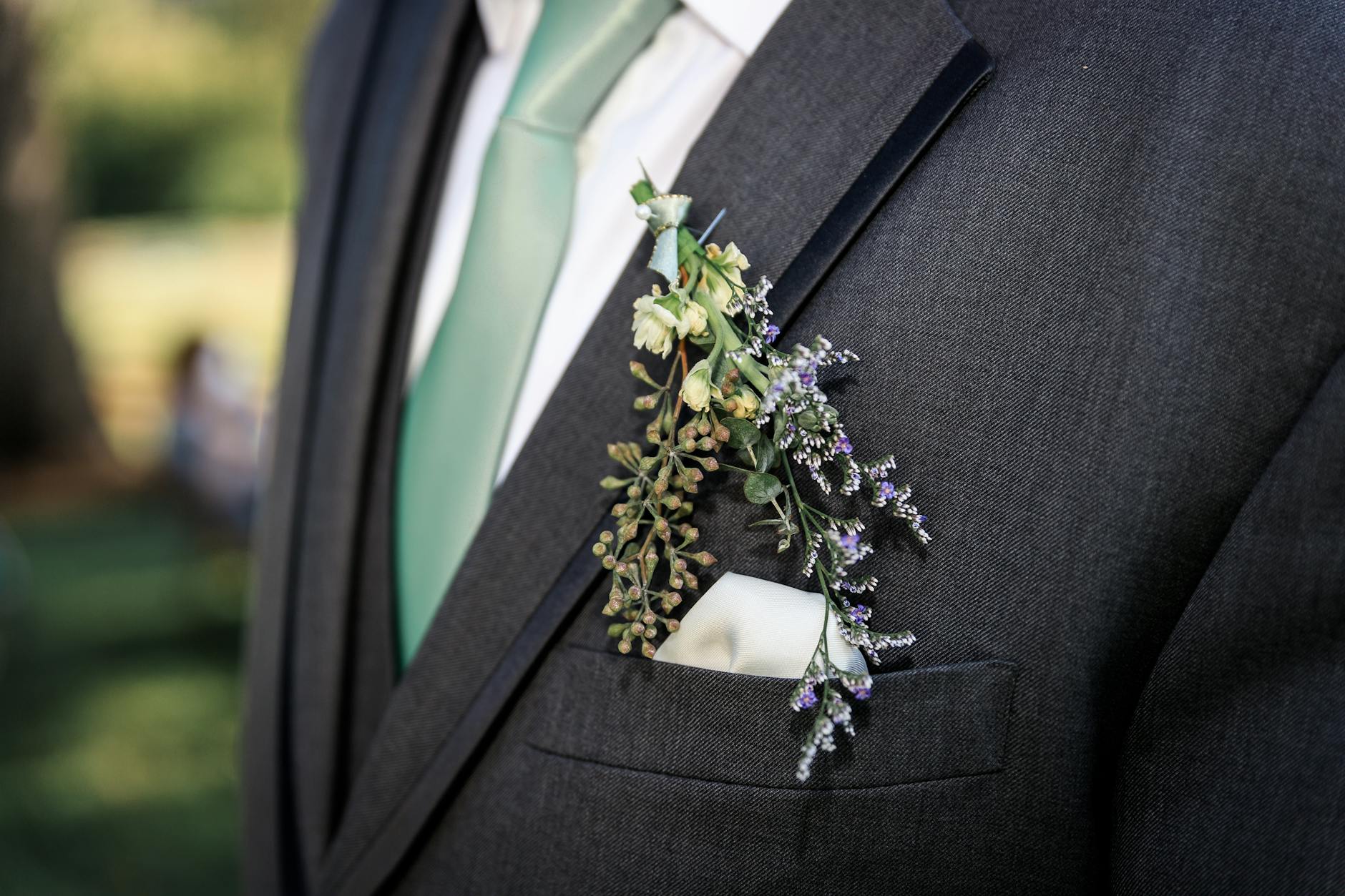
- The groom differentiates with one element. Common options: same color but slightly darker fabric, same fabric but different lapel (peak instead of notch, or a contrasting lapel facing), a contrasting waistcoat, a contrasting tie, or a unique boutonniere arrangement.
- The father of the bride and father of the groom wear something distinct from both. Typically a slightly more conservative cut, often charcoal or grey when the wedding party is in navy. They should not match the groomsmen or the groom — they should be visually adjacent.
The single biggest styling mistake we see: the groom going dramatically different from the groomsmen. A groom in white when the groomsmen are in charcoal looks cinematically striking in five photos and slightly off in the other four hundred. The contrast within the bridal party is more flattering when it is restrained.
Single-Breasted Versus Double-Breasted
Single-breasted, two-button, notch lapel is the modern wedding default and the safest call for any party with mixed body types. It flatters tall and short builds, slim and broader builds, with very little risk.
Double-breasted has been making a comeback since 2022 and looks particularly good on tall slim builds. The trade-off is that double-breasted is unforgiving on broader middle sections — the front panel of a double-breasted jacket flat against a softer torso is not a flattering line. If you have a wedding party with mixed body types, do not put everyone in double-breasted; put the groom in double-breasted and the groomsmen in single-breasted, which is also a clean way to differentiate the groom.
Three-piece suits (jacket, trousers, waistcoat) are the third axis. A three-piece reads more formal and gives the wedding party the option to remove the jacket during the reception while still looking dressed. We recommend three-piece for the groom by default. Whether the groomsmen also wear waistcoats is a styling choice — typically yes for formal evening weddings, optional for daytime weddings.
Fabric for Tropical and Hot-Weather Venues
Destination weddings in Vietnam, Thailand, Bali, the Caribbean, southern Italy, Mexico — all of these venues are hot, often humid, and frequently outdoor. The wrong fabric will make every photograph show damp shirts and wilted lapels. The right fabric is the difference between a comfortable wedding day and a miserable one.
Wool, but lightweight
Wool in the 8–10 oz range, often called "tropical wool" or "Super 110s lightweight," is the best all-purpose hot-weather fabric. It breathes well, drapes correctly, and crumples less than linen. Italian mills like VBC and Marzotto produce excellent tropical-weight wools in navy, charcoal, and midnight blue.
Wool-silk-linen blends
For genuinely hot venues (above 32°C / 90°F at the ceremony hour), a wool-silk-linen blend (typical ratios are 50/30/20 or 60/20/20) is dramatically more comfortable than pure wool. The silk adds a subtle sheen that photographs beautifully; the linen adds breathability. The trade-off is that the fabric wrinkles more — by mid-reception there will be soft creases. Most of our destination wedding clients accept this trade-off because the alternative is sweating through pure wool.
Pure linen
Pure linen is the most comfortable hot-weather fabric and the most casual. It is appropriate for a beach ceremony, a garden ceremony, or any wedding where the dress code is "destination casual." It is generally not appropriate for a black-tie wedding. Pure linen wrinkles aggressively — by the time the first dance happens, the trousers will look like they have been slept in. This is part of the linen aesthetic and not a flaw.
Avoid for hot weather
Pure cashmere blends, heavy worsteds (12 oz and above), velvet, and any fabric described as "winter weight" should be avoided for hot-weather weddings regardless of how good they look in the showroom. They will be miserable on the day.
Group Discount Norms in Hoi An
Hoi An tailors generally offer some form of group discount for wedding parties, and the conventions vary. The honest range:
- Parties of 4–6: 5–10% off the per-suit price, or a free shirt or tie thrown in.
- Parties of 7–10: 10–15% off, sometimes including the groom's suit upgraded to premium fabric for free.
- Parties of 11+: 15–20% off, plus extras like waistcoats, accessories, or shipping included.
What to watch for: a discount that comes with a fabric downgrade. "We can do 20% off if you choose this fabric" sometimes means the shop is steering you toward a polyester blend for cost reasons. Confirm the fabric before agreeing to the discount, and inspect the bolts in person where possible.
Our own approach is straightforward — we publish our wedding-party pricing on the website and apply transparent group rates that scale by party size. There is no negotiating dance. We would rather price honestly upfront than perform a discount theater that other shops sometimes do.
What Happens to the Suit Afterwards
Most groomsmen wear their wedding suit four to eight more times after the wedding — other weddings, work events, important dinners. The suit is built to last decades if cared for. The two most important things you can do:
- Steam, do not dry-clean. Dry-cleaning every six months will destroy the canvas and lining over five years. A handheld garment steamer at home, used after every two or three wears, is enough for almost all situations. Dry-clean once or twice a year maximum.
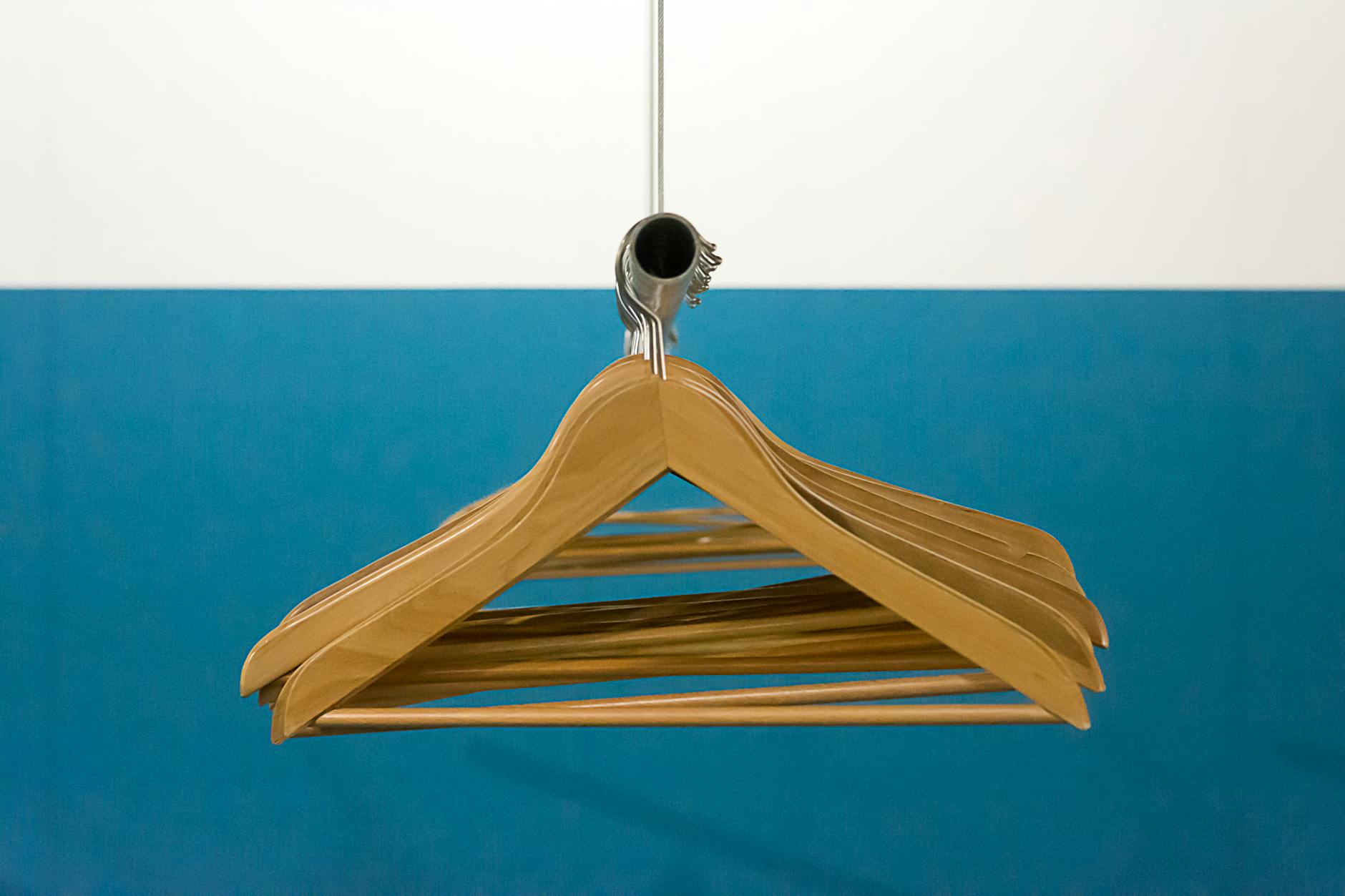
- Hang on a wide wooden hanger. Wire hangers and narrow plastic hangers will deform the shoulders within six months. A 5 cm thick wooden hanger that matches the suit's shoulder width is the right tool. Most reputable shops will give you one with the suit.
For the full care protocol — pressing, storage between wears, pre-event prep — our companion guide on caring for a Hoi An suit at home goes into deeper detail. Spending fifteen minutes reading it in the first month of owning the suit is worth a decade of additional life on the garment.
One Last Note for Couples Planning
The wedding-suit decisions you are making feel large in the moment because the wedding feels large. They are. But six months from now, almost no guest will remember whether the lapel was 7.5 cm or 9 cm. They will remember whether everyone in the photographs looked comfortable, happy, and harmonious. That outcome comes from booking early, picking a fabric appropriate to the venue, restraining the groom-versus-groomsmen contrast to something tasteful, and not improvising in the last six weeks.
If we can help — your wedding party in Hoi An, or remote-ordered to wherever you are — we are reachable on WhatsApp, and we keep a wedding-party calendar that books out roughly six months ahead in peak season. Whatever shop you choose, message them now rather than later.